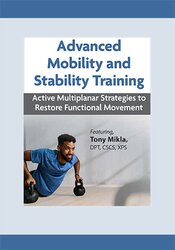
After sustaining a loss of function, patients and 3rd party payers want immediate change. Rehab clinicians rightfully expect the same efficiency from skills-based education. This 2-day training will not disappoint - you will get a wealth of information for immediate application with guaranteed results.
You will discover how to approach assessment and rehab differently. If you’re still relying on the standard single plane assessment methods, you’re missing a big piece of the puzzle – functional, real-world application! Level up your treatment with multiplanar active assessments that are easy to apply to the whole body. Uncover the unique properties of concurrent mobility and stability throughout the kinetic chain to enable whole body functional movement patterns.
This comprehensive, joint by joint approach seamlessly transitions from assessment to treatment. You’ll learn today’s best practices to:
- Quickly determine the actual anatomic contributor to the loss of mobility and function
- Integrate manual therapy techniques – trigger point release, IASTM, vibration, joint mobilization and more
- Incorporate strengthening with an emphasis on dynamic stability and graded progression
- Real world application that accommodates all fitness levels from independent ADLs up to elite athletic performance
Best of all, no expensive equipment needed. You’ll discover novel approaches utilizing basic supplies including exercise bands/tubing, foam, physio balls and more. Look no further because it doesn’t get better than assessment, manual therapy techniques and stabilization exercise – ALL in one course!