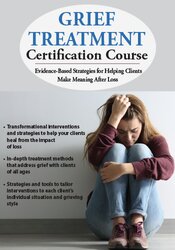
Your client’s world has been shattered following the loss of a loved one. Not only are they adjusting to these days and weeks without that person, but they are also struggling with changes to their sense of self. Who are they now as they navigate this new world? Your client is stuck in a place of paralyzing sorrow, and you’re unsure of what else to do to help.
You can transform the way you treat grieving clients with the tools and strategies you’ll learn in this 2-day Comprehensive Course!
Follow Rev. Dr. Joy Samuels, LPC-MHSP, NCC, as she leads you through the process of working with bereaved individuals and aiding them with making meaning after loss. You’ll learn evidence-based counseling strategies appropriate for the treatment of multiple types of losses, and you’ll acquire the skills you need to tailor clinical interventions to the uniqueness of each client’s grief experience.
Watch this advanced course, and you’ll learn how to guide your clients through making meaning after loss - drastically increasing their well-being and reducing symptoms of complicated grief. You’ll walk away with the tools you need to help your clients live fulfilling lives after loss.
Best of all, upon completion of this seminar, you’ll be eligible to become a Certified Grief Informed Professional (CGP) through Evergreen Certifications. Certification lets colleagues, employers, and clients know that you’ve invested the extra time and effort necessary to understand the complexities of grief counseling. Professional standards apply. Visit www.evergreencertifications.com/CGP for details.
Purchase today to revolutionize your work with grieving clients!
CERTIFICATION MADE SIMPLE!
- No hidden fees – PESI pays for your application fee (a $99 value)!
- Simply complete this seminar and the post-event evaluation included in this training, and your application to be a Certified Grief Informed Professional through Evergreen Certifications is complete.*
Attendees will receive documentation of CGP designation from Evergreen Certifications 4 to 6 weeks following the program. *Professional standards apply. Visit www.evergreencertifications.com/CGP for professional requirements.