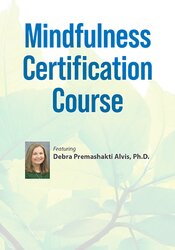
This 2-day Certification training is your chance to become a Certified Mindfulness Informed Professional (CMIP) and get the skills and guidance you need to successfully incorporate mindfulness practices into your treatment plans!
And unlike other Mindfulness Certification programs that are too expensive, too time consuming, and require extensive travel, this training is completely within your reach!
Dr. Debra Alvis is a clinical psychologist and expert on mindfulness who developed the Mind/Body Program at the University of Georgia. Dr. Alvis lectures and leads retreats around the world and her trainings have helped thousands of clinicians to integrate the richness of Mindfulness into therapy for greater clinical effectiveness.
Watch her for this 2-day intensive online training and get:
- How-to instruction on using mindfulness-based exercises with clients working through stress, anxiety, trauma, depression, anger, and addiction
- Specific guidance on using mindfulness with individuals and groups
- Feedback and tips on how you can strengthen your personal mindfulness practice
Best of all, upon completion of this training, you’ll be eligible to become a Certified Mindfulness Informed Professional (CMIP) through Evergreen Certifications. Certification lets colleagues, employers, and clients know that you’ve invested the extra time and effort necessary to understand the complexities of using mindfulness in counselling. Professional standards apply. Visit www.evergreencertifications.com/cmip for details.
Purchase today, enhance your clinical practice, and fundamentally improve the lives of your clients as a Certified Mindfulness Informed Professional (CMIP)!
CERTIFICATION MADE SIMPLE!
- No hidden fees – PESI pays for your application fee (a $99 value)*!
- Simply complete this seminar and the post-event evaluation included in this training, and your application to be a Certified Mindfulness Informed Professional (CMIP) through Evergreen Certifications is complete.*
Attendees will receive documentation of CMIP designation from Evergreen Certifications 4 to 6 weeks following the program. *Professional standards apply.
Visit www.evergreencertifications.com/cmip for professional requirements.