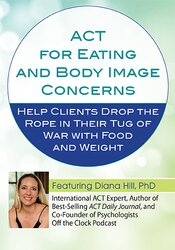
Caught in a tug of war with food and weight, many clients presenting for therapy suffer in their battle with body image and eating.
Entangled in preoccupation about weight loss and feeling stuck in cycles of rigid dieting, the chaos of overeating, shame, and hopelessness clients present with negative self-worth, eating disorders, relationship problems, anxiety, or depression.
But it doesn’t have to be this way.
Watch Acceptance and Commitment Therapy (ACT) expert and author Diana Hill, Ph.D., to learn ACT—a fresh, modern and evidence-based approach—for treating eating and weight concerns.
In this experiential training, Dr. Hill will guide you through a new way of conceptualizing eating concerns as an attempt to control or avoid the discomfort of living. You’ll learn ACT practices to help clients build the superpower of psychological flexibility—the skill they need to stay present, open, and free to engage in what matters most to them, even in the face of life’s many obstacles.
Watch and learn…
- Powerful strategies to motivate clients to choose a different path
- Experiential exercises to increase acceptance, willingness, and allowing of difficult feelings and cravings
- “Beginners mind” and “one-eye-in one-eye-out” to increase client’s contact with the present moment
- How to apply cognitive defusion strategies with clients
- “The attuned parent” strategy to increase client’s perspective taking and self-compassion
- Values-based action plans to guide clients in taking committed action toward their values
Purchase today to begin your journey with helping clients let go of their struggle with food and weight and direct their energy toward building rich and meaningful lives!