Have you ever found yourself at the bottom of your clinical toolbox when working with clients? Whatever the diagnosis—the problem is usually the same—therapy stalls and you don’t know what to do next.
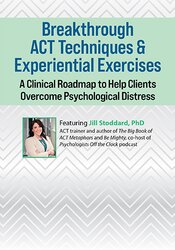
Watch peer-reviewed ACT trainer and author, Jill Stoddard, PhD, for this Acceptance and Commitment Therapy (ACT) experiential. Dr. Stoddard will teach you how to skillfully apply the six core processes of ACT to build the psychological flexibility your clients need to overcome psychological distress.
You’ll learn breakthrough techniques and salient exercises—not found in other ACT trainings—that will help your clients stay in the moment with all their thoughts and feelings, without defense, and ready to make choices that help them heal.
You’ll leave this training being able to successfully apply ACT in therapy as well as teach your clients—even the most challenging—how to put ACT into practice themselves!
Purchase today!