Play is the window into—and the foundation for— the development of language, text comprehension, cognition and social-emotional skills in children. It’s essential to know children’s developmental play level if we are to select appropriate play interventions. Yet there are few tools that allow the clinician or teacher to look at these skills in a holistic way.
The Westby Play Scale gives us just that—it’s a unique assessment tool that allows us to evaluate these skills while children play!
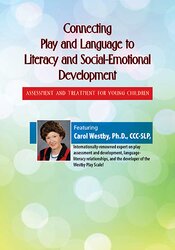
Watch Dr. Westby, internationally-renowned expert on play assessment and development and language-literacy relationships, and learn to effectively use the Westby Play Scale to assess children’s symbolic play skill level, language skills and how they use language. Supported by 40 years of evidence-based research, the scales will help you set goals at the right developmental level for all the young children (birth-5) you work with.
Don’t miss this chance to learn from Dr. Westby, an icon in the field who will teach you how to integrate the play practices and play strategies essential to promote:
- Higher-level thinking, problem-solving and creativity
- A range of language skills
- The foundations for developing text comprehension
- Awareness of temporal, cause-effect and social relationships
- Empathy, which is important for interpreting and responding appropriately to the needs, desires, and roles of others
- Interactions essential for social-emotional development
- Ability to self-regulate, organize and monitor their own behavior so they can become independent, self-motivated learners
Purchase today and learn an approach that targets skills at appropriate developmental levels for children, builds language simultaneously, is highly transferable and most of all, is fun!