- Clinical tools to increase client awareness of emotional construction
- Interventions for reconstructing emotional meaning and actions
- Spot and intervene in client’s rigid emotional scripts in real time
- Strategies to improve flexibility, expand behavioral choice and restore adaptive responses
Reactive patterns don’t change just because clients understand them.
You’ve seen this with your trauma clients. They understand their patterns and have processed painful memories with you…
Yet, when real-world triggers hit, the same shame, fear, or reactivity comes right back.
That’s because you need to work at the level where emotional responses are wired to repeat.
Structural Emotional Reorganization (SER) is designed to engage that level, drawing on principles from established models like EMDR, EFT, and DBT.
…to help clients explore pathways toward more regulated, intentional responses rather than emotional reflexes.
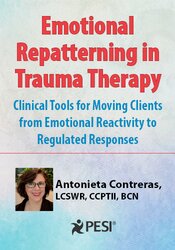
In this one-day training you’ll join Antonieta Contreras, LCSW R, CCPT II, author of Traumatization and Its Aftermath and developer of the Structural Emotional Reorganization integrative framework.
As she teaches you how to apply this neuroscience-informed approach in your own clinical work, expanding your toolkit for engaging clients who feel hijacked by old reactions.
Join this 6 hour training and gain:
- A clear framework for identifying the most common rigid emotional scripts
- Practical tools to address automatic reactions and support emotional flexibility
- Clinical Interventions that support healthier relationship responses and choices when triggered
- Real-world case examples showing how SER is applied to “stuck” patterns that don’t always respond to traditional approaches
Refine your ability to help clients move beyond default reactions toward adaptive emotional responding!
Register today!