When kids experience trauma or other negative life events such as abuse, neglect, bullying, racism, violence, or educational difficulties, they often hold powerful negative beliefs about themselves, such as “I’m broken”, “I’m unlovable”, or “It was my fault”.
As a therapist, you know that play is a child’s natural language for expressing emotions, processing experiences, and resolving internal conflict. But did you know that you can expand this work further by incorporating Internal Family Systems (IFS) therapy into your session? By weaving the essence of IFS therapy, parts work, with play therapy interventions, you can help kids conceptualize themselves and their experiences in a healthier way.
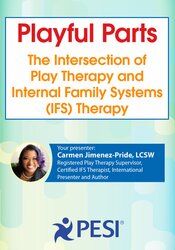
Watch Carmen Jimenez-Pride, LCSW, RPT-S, and Certified IFS Therapist, as she expertly pairs the therapeutic power of play with the non-pathologizing, flexible approach of IFS therapy. Through expert explanation and demonstration, Carmen will teach you how to integrate these two powerful therapy methods so you can help young clients:
- Release shame as they explore and make sense of their internal sensations and experiences
- Give voice to all their “parts”, none of which are bad or wrong
- Express and process painful emotions, urges, and memories without assigning blame or shame to them
- Unhook from distressing beliefs about themselves and their experiences
- Enhance social relationships, foster emotional wellness, and build on personal strengths
- Develop cognitive flexibility and reframe self-doubt
- And so much more!
Take your play therapy interventions even further by incorporating IFS therapy – purchase today!
This product is not endorsed by, sponsored by, or affiliated with the IFS Institute and does not qualify for IFS Institute credits or certification.