Punitive discipline drains instructional time, burns you out and let’s face it … rarely changes student behavior.
That’s why Restorative Practices are a gamechanger – proven to reduce suspensions, referrals and repeat offenses.
Because restorative practices give you the tools to connect with students, build their sense of belonging and help them take ownership of their actions …
… instead of making them feel blamed, unwelcome and unsupported.
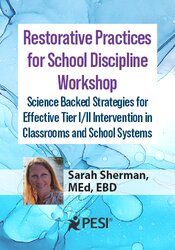
This workshop shows you how.
When you purchase you’ll get practical, ready-to-use restorative strategies that fit seamlessly into your existing PBIS/MTSS framework.
Walk away with concrete tools you can use immediately to build calm, connected, predictable environments where students learn skills instead of repeating cycles.
You’ll learn how to:
- Reduce suspensions, referrals, and expulsions
- De-escalate conflict without power struggles
- Build classroom communities where students own their actions
- Close discipline gaps with equitable practices
- Give your team a shared language for discipline
If you’re ready to stop pushing students out, help them build skills instead of feeling blamed – and finally make discipline feel less frustrating and more effective …
This workshop is for you. Purchase today.