Your client just revealed that she’s having suicidal thoughts … what do you do?
Does she have a gun? Has she written letters? Picked a location? Have hope something will change and doesn’t want to hurt family and friends?
Asking your client, “where do you hurt?” often reveals the focus of the suicidal intent or the purpose of self-harm behaviors. As a clinician, it’s important to remember that even though you view suicide and self-harm behaviors as dysfunctional and maladaptive, your client views them as purpose-driven means of eliminating or managing unbearable levels of pain. For your client, these behaviors are beneficial, attractive, and helpful.
Even the most seasoned therapists struggle to develop an empathic view of their client’s devastating methods of managing emotional pain. Learning how to help clients discover the sources of their pain and providing them with healthy options for solving and managing these struggles in their lives is the key to hope.
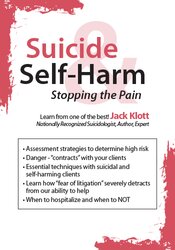
Through case studies observed in his 45 years as a counselor and suicidologist, Jack Klott brings to life the ideas, theories, and concepts you need to help your clients:
- Identify the seven goals of self-harm
- Implement a risk assessment strategy to determine who presents the highest risk for suicide and self-harm
- Recognize the profound danger of engaging in “contracts” with your clients
- Discuss the four essential elements of therapy with suicidal and self-harming clients
- Understand how “fear of litigation” can severely detract from your ability to help the suicidal population
Watch Jack and learn how to help your clients confront the darkness of suicide and self-harm behaviors. Purchase today!