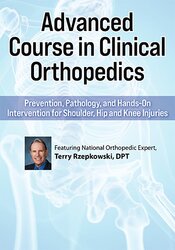
Orthopedics is an incredibly fast-moving specialty. Technological advancements are dramatically adding to the vast options available for a wide variety of orthopedic problems — making it challenging to stay current...
It’s imperative that your treatment decisions are guided by the latest research-based information. This comprehensive online course makes it easy for you to ensure the best outcomes for your patients.
Watch orthopedic expert, Terry Rzepkowski, DPT, as he shares cutting edge concepts that are being integrated into practice today and learn the latest clinical evidence that should be guiding your treatment decisions. You’ll gain practical new insights and discover the latest treatment updates for this specialized patient population:
- Techniques to minimize the impact of degenerative joint disease in both inpatient and outpatient settings
- How to differentiate the type of joint damage that has taken place
- Strategies to avoid orthopedic complications
- Video demonstrations of actual joint surgical procedures
- Total joint replacement rehabilitation strategies for the shoulder, elbow, hip, and knee.
- Functional strategies to manage post-op rehab
- And much more!
Return to work with new ideas, new tests you can use to identify orthopedic problems correctly, and new concepts to make certain the rehabilitation plan chosen is specific to your individual patients. Master joint rehabilitation techniques, increase your credibility, grow your career potential — And most importantly, improve your patients’ treatment outcomes.