Digital Seminar

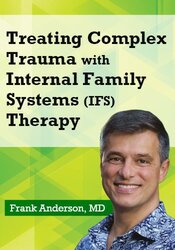
2-Day Intensive Workshop: Treating Complex Trauma with Internal Family Systems (IFS) Therapy

$459.99 Standard

Most modes of psychotherapy believe that having “parts” is pathological, but in IFS therapy, the idea of multiplicity of the mind is normal. Every part has a good intention, and every part has value. Even for trauma survivors.

In the treatment of trauma, IFS therapy is different from traditional phase-oriented treatments. Instead of starting with building resources in clients before processing traumatic memories, it welcomes extreme symptoms from the onset, learns about their positive protective intentions and gets their permission to access the traumatic wounds.

Hailed by Dr. van der Kolk, the world’s leading expert in trauma, IFS therapy is the treatment method that all clinicians should know. Nearly all clients with a trauma history have innate abilities that help them improve their mental health if they listen to their parts.

Watch IFS therapy and trauma expert Frank Anderson, MD, in this transformational workshop. Once you see it in action, you’ll want to incorporate it into your practice.

Clients will leave your office with skills to use outside the therapy room to help them master their emotions. This experiential workshop will show video demonstrations and include exercises and meditation techniques to use with your clients.

This product is not endorsed by, sponsored by, or affiliated with the IFS Institute and does not qualify for IFS Institute credits or certification.

Here's What You'll Learn


Treating the Various Types of Trauma
  • Acute trauma
  • PTSD
  • Complex or relational trauma
  • Developmental and attachment traumas
  • Extreme or dissociative trauma
Internal Family Systems (IFS): Healing of Emotional Wounds
  • The origins, goals & assumptions
  • A non-pathologizing, accelerated approach, rooted in neuroscience
  • Different from phase-oriented treatment
    • The importance of our protective responses
    • Deal with emotional overwhelm head-on
  • Multiplicity of the mind – we all have parts
  • Healing at the cellular level
  • Study limitations: small sample size, no control group
  • Clinical considerations for clients experiencing abuse
Manage Common Co-Morbidities
  • Depression, panic attacks, substance abuse, eating disorders, ADD and OCD
  • A non-pathological approach
    • Comorbidities as protective responses to trauma
    • Symptoms as “parts of the self”
Differentiate Therapeutic Issues from Biological Conditions
  • Intersection of biology and situation (“Real Mind-Body Medicine”)
  • Therapist’s role in biology – When to refer and when to work it through
  • Psychotherapy of psychopharmacology
The IFS Technique

Step 1: Identify the Target Symptom
  • Identify the “target symptom”
  • Apply meditation practices
  • Separate the person (self) from the symptom
  • Learn about its intention
Step 2: Gain Access to Internal Strengths & Resource for Healing
  • Move from defensiveness to curiosity
  • The “Self” of the therapist-countertransference redefined
  • Access compassion to open the pathways toward healing
  • Role of empathy in healing – the benefits and the downsides
Step 3: Find the Fear and Function of the Symptom
  • Focusing on its fear
  • The real story behind the symptom
  • Foster the internal relationship
Attachment Disorders and Relational Trauma
  • IFS as internal attachment work
  • Attachment styles as parts of self
  • Attachment trauma – the role of the therapist
  • Heal relational wounds of childhood
  • Client’s “Self” as the corrective object
  • Work with preverbal trauma
The Neurobiology of Trauma
  • Neuroscience for therapists – what you need to know
  • Fear circuitry and the development of PTSD
  • Extreme reactions and Autonomic Nervous System
  • Rage to suicide and dissociation to shame
Dealing with the Extreme Reactions of Trauma
  • Talk directly to the symptom-direct access
  • Introducing the part to the “Self”
  • Deal with the overwhelm – no need for building resources
  • Therapist parts – How to stay clear and calm while working with clients in extreme states
How Neuroscience Informs Therapeutic Decisions
  • Top-down and bottom-up strategies rooted in neuroscience
  • When it’s necessary to take over and “be the auxiliary brain” for your client
  • Sensing vs. making sense of things
  • At home strategies
Step 4: Healing of Traumatic Wounds:
  • Three phases to healing:
    • Witness the pain
    • Remove the wounded part out of the past
    • Let go of the feelings, thoughts and beliefs
  • Science behind the healing – memory reconsolidation
Integrate IFS into Your Treatment Approach
  • EMDR, DBT, Sensorimotor/SE and other methods
  • Transformation vs adaptation or rehabilitation
  • Going beyond the cognitive (experiential therapies)
  • Integrate IFS with your current clinical approach
Live demonstrations
Meditations
Practice sessions

Everything You're Getting


  • More than 12 hours of video content
  • CE information to come
  • Handouts and resources

We Recommend


This Item

Will be added to the cart.
2-Day Intensive Workshop: Treating Complex Trauma with Internal Family Systems (IFS) Therapy
Digital Seminar
$459.99

Meet Your Experts


Frank Anderson, MD

Toggle speaker biography

Frank Anderson, MD, completed his residency and was a clinical instructor in psychiatry at Harvard Medical School. He is both a psychiatrist and psychotherapist. He specializes in the treatment of trauma and dissociation and is passionate about teaching brain-based psychotherapy and integrating current neuroscience knowledge with the IFS model of therapy.

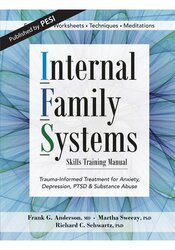
Dr. Anderson has lectured extensively on the Neurobiology of PTSD and Dissociation and wrote the chapter “Who’s Taking What” Connecting Neuroscience, Psychopharmacology and Internal Family Systems for Trauma in Internal Family Systems Therapy – New Dimensions. He co-authored a chapter on What IFS Brings to Trauma Treatment in Innovations and Elaborations in Internal Family Systems Therapy, and recently co-authored Internal Family Systems Skills Training Manual.

His most recent book, entitled Transcending Trauma: Healing Complex PTSD with Internal Family Systems was released on May 19, 2021.

His memoir, To Be Loved, was released on May 7, 2024.


Speaker Disclosures:
Financial: Dr. Frank Anderson maintains a private practice, is the co-founder of the Trauma Institute, and is the co-founding producer of Trauma Informed Media. He receives royalties as a published author. He receives a speaking honorarium, recording, and book royalties from PESI, Inc. He has no relevant financial relationships with ineligible organizations.
Non-financial: Dr. Frank Anderson is a member of the New England Society Studying Trauma and Dissociation and the International Society for the Study of Trauma and Dissociation.

100% Satisfaction Guarantee

Register for this intensive training course without risk. If you're not completely satisfied, give us a call at 800-844-8260.

We’re that confident you'll find this learning experience to be all that's promised and more than you expected.

PESI App


Access CE trainings on your phone or tablet through our free mobile app. Choose video or audio-only versions of online courses from the world's best instructors, and complete your CE requirements anywhere, anytime, at your own pace.


Access for Self-Study (Non-Interactive)

Access never expires for this product.

Questions?

Visit our FAQ page at www.pesi.com/faq or contact us at www.pesi.com/info

Please Note

This product is not endorsed by, sponsored by, or affiliated with the IFS Institute and does not qualify for IFS Institute credits or certification.
Want this training for your whole team?

Get a customized training package for your team at a discounted rate!

Claim your FREE listing


Need referrals? List your practice in the directory for FREE!


Media Type:
Digital Seminar
Product Code:
POS053540
Duration:
12 hours, 31 minutes
Copyright:
Sep 10, 2020
Closed Captions:
Available
Format:
Audio and Video

ADA Needs


We would be happy to accommodate your ADA needs; please call our Customer Service Department for more information at 1-800-844-8260.

Some text some message..
Back to Top