Elevate Your Trauma Therapy and Become a Certified Clinical Trauma Professional (CCTP)
- Assessment tools every clinician needs
- Ground clients and set the stage for effective therapy
- Tools to reprocess traumatic memories without re-traumatizing
- Expert guidance on handling dissociation, numbness, and flashbacks
Looking to elevate your trauma therapy and earn a recognized trauma certification?
This training provides the comprehensive instruction in trauma assessment and treatment techniques you need to confidently evaluate, treat, and guide clients through trauma from start to finish.
… PLUS meets the requirements to become a Certified Clinical Trauma Professional (CCTP) through Evergreen Certifications, giving you credentials that can advance your clinical practice and let clients know you’re ready to help.
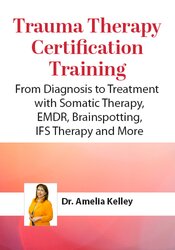
You’ll watch Amelia Kelley, PhD, LCMHC. She’s a seasoned trauma clinician, best-selling author, TEDx lecturer, and university professor.
She’ll show you everything you need to assess complex trauma, cerate effective treatment plans, and apply some of today’s most trusted interventions.
From understanding the neurobiology of trauma and recognizing symptoms and somatic responses to how to get an accurate diagnosis and applying skills, tools and strategies from EMDR, Brainspotting, and IFS therapy – Dr. Kelley will cover it all.
You’ll end this training ready to:
- Use the neurobiology of trauma to guide and individualize treatment
- Make the right diagnosis for your clients with today’s best assessment tools
- Learn an approach to trauma treatment that moves clients from safety to processing
- Use somatic techniques to help clients feel safe in their bodies again
- Apply intervention strategies from EMDR, Brainspotting, and IFS therapy
And best of all? This program goes beyond theory, combining step-by-step detailed instruction with demonstrations, follow-along experiential exercises, and case scenarios that reinforce what you learn and makes it feel instantly applicable to the clients you work with every day.
This comprehensive toolkit would take months to assemble on your own – but Dr. Kelley has brought it all together into one powerful training experience.
Even if you’re newer to trauma work, this training equips you with the tools and expert guidance you need to treat trauma with confidence.
Purchase now!
CERTIFICATION MADE SIMPLE!
- No hidden fees – PESI pays for your application fee (a $99 value)*!
- Simply complete this live event and the post-event evaluation included in this training, and your application to be a Certified Clinical Trauma Professional (CCTP) through Evergreen Certification is complete*
Attendees will receive documentation of CCTP certification from Evergreen Certifications 4 to 6 weeks following the program.
*Professional standards apply. Visit www.evergreencertifications.com/CCTP for professional requirements.
This event is not endorsed by, sponsored by, or affiliated with the IFS Institute and does not qualify for IFS Institute credits or certification.
This course is not affiliated with EMDRIA and does not qualify toward EMDRIA credits or training.