A wave of grief and loss has impacted millions of people and more clients than ever before are seeking the help of professionals.
But if you’re like many therapists, in-depth training on counseling and treating grieving clients wasn’t part of your graduate program.
How can you make sure you’re ready to work with this rapidly growing client population?
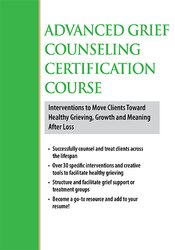
This all new 3-day grief certification training features 2 of our very best received trainers in the area of grief and bereavement - both highly experienced clinicians with decades of experience in the field. Together they will provide you with the tools, techniques and clinical know-how to counsel and treat clients across the lifespan whose lives have been upended by losses of all kinds.
And unlike other trainings, this program will go beyond the basics, growing your clinical skills and confidence with interactive exercises, expert guidance, practical tips, and real-world case studies so you know exactly how to:
- Uncover grief intensity and assess for risks like suicidal ideation
- Recognize and respond to grief types with appropriate treatment plans
- Employ over 30 specific clinical tools to facilitate healthy grieving and build resiliency
- Successfully structure and facilitate grief support or treatment groups
- And much more!
PLUS, when you purchase this course, your certification is completely FREE should you choose to become a Certified Advanced Grief Counseling Specialist through Evergreen Certifications upon completion of this training.
(visit www.evergreencertifications.com/cagcs for complete application requirements).
Purchase today, set yourself apart from other clinicians, and help your clients discover a path toward hope and meaning following loss!
CERTIFICATION MADE SIMPLE!
- No hidden fees – PESI pays for your application fee (a $249 value)*!
- Simply complete this seminar and the post-event evaluation included in this training, and your application to be a Certified Advanced Grief Counseling Specialist (CAGCS) through Evergreen Certifications is complete.*
Attendees will receive documentation of CAGCS designation from Evergreen Certifications 4 to 6 weeks following the program.
*Professional standards apply. Visit www.evergreencertifications.com/CAGCS for professional requirements.