
3-Day Rapid Response Certification Conference
Critical Next Steps for the Deteriorating Patient
- Speaker:
- Sean G. Smith, MSc, FP-C, C-NPT, CEN, CFRN, CTRN, TCRN, CPEN, CCRN-CMC (Adult), CCRN-K (Neonatal), CCRN-K (Pediatric)
- Duration:
- 19 Hours 30 Minutes
- Format:
- Audio and Video
- Copyright:
-
Sep 26, 2023
- Product Code:
- POS078523
- Media Type:
- Digital Seminar

Description
You know that pit in your stomach feeling when your patient is about to take a turn for the worse. It all happens so quickly! Soon you are calling for the rapid response team to provide some back-up. Those minutes feel long until others arrive to lend a clinical hand.
Watch Sean G. Smith MSc, FP-C, C-NPT, CEN, CFRN, CPEN, CCRN-CMC (Adult), CCRN-K (Pediatric), to go beyond advanced life support courses and gain next-level knowledge to stabilize the emergent patient - both safely and successfully.
What you can expect:
- Update on the latest clinical practice guidelines
- Master medication updates with up to 3 hours of pharmacology CE hours
- 6+ hours of the BEST resuscitation and stabilization strategies
- Protect yourself! Includes 2 hours of legal/malpractice risk reduction tips
- Anticipate impending changes in your patients to intervene quickly
- Reinforcement through exciting – and real! – patient cases
Few patients are more terrifying or difficult than the rapid response patient. This training will deliver new clinical problem-solving skills, so you will be confident and competent!
Credit
Handouts/Brochure
| File type | File name | Number of pages | |
|---|---|---|---|
| Manual - 3-Day: Rapid Response Certification Conference (28.6 MB) | 390 Pages | Available after Purchase | |
| Blood Gasses (90.5 KB) | 2 Pages | Available after Purchase |
Speaker
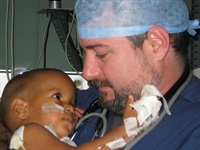
Sean G. Smith, MSc, FP-C, C-NPT, CEN, CFRN, CTRN, TCRN, CPEN, CCRN-CMC (Adult), CCRN-K (Neonatal), CCRN-K (Pediatric) Related seminars and products
Sean G. Smith, MSc, FP-C, C-NPT, CEN, CFRN, CTRN, TCRN, CPEN, CCRN-CMC (Adult), CCRN-K (Neonatal), CCRN-K (Pediatric), is a humanitarian/flight nurse-paramedic who is triple board-certified in neonatal, pediatric, and adult critical care and emergency medicine. He brings 30+ years of education and team/leadership experience to his presentations from a career that includes global health, tropical medicine, research molecular neuroendocrinology, nuclear engineering technology, US Navy aviation/NASA manned space flight support, and high-performance teams/high-yield pedagogy, dozens of national/international conference presentations and various awards and honors. Author/co-author/review credits include a best-selling laboratory medicine textbook, a chapter on shock in Nursing Core Curriculum a section in the newly released Resuscitation Crisis Manual, numerous other industry-standard textbooks, and several professional association critical care/emergency medicine curriculums and board certification review courses (AACN, ANN, ENA, SCCM, etc.). Additionally, Sean routinely consults on clinical, legal, and certification matters for numerous high-profile hospital systems (Yale, Mayo, etc.). He holds an MSc in Pharmacy/Forensic Science, bachelor’s degrees in business administration, nursing, and molecular biology, and post graduate certificates in Forensic Death Investigation, Legal Consulting, and Tropical Medicine. In addition to being active in a number of professional associations (SCCM, AACN, WADEM, etc.), Sean is a life member of Mensa, The Emergency Nurses Association, and the Air Surface Transport Nurses Association. He has served on the executive committees and in various leadership roles of numerous charities and professional associations and has led/participated in 50+ medical missions (Dominican Republic, Honduras, Morocco, Liberia, Nepal, Iraq, Democratic Republic of Congo, and Haiti). Sean served as a clinician and educator during the largest Ebola and Cholera outbreaks in recent history and is currently active in building sustainable neonatal-pediatric cardiac critical care capacity in Iraq, as well as serving as part of a national-level multidisciplinary child sexual assault forensics team in Guyana, South America. Hobbies include Scuba diving and vintage science kits, tube amplifiers, and motorcycles.
Speaker Disclosures:
Financial: Sean Smith is an independent contractor. He receives a speaking honorarium and recording royalties from PESI, Inc. He has no relevant financial relationships with ineligible organizations.
Non-financial: Sean Smith is a member of the American Association of Critical Care Nurses, the Emergency Nurses Association, and the Society for Critical Care Medicine.


Additional Info
Access for Self-Study (Non-Interactive)Access never expires for this product.
Questions?
Visit our FAQ page at www.pesi.com/faq or contact us at www.pesi.com/info
Objectives
- Develop a proactive high performance rapid response team approach to respond to deteriorating patients.
- Apply psychological safety during rapid response situations.
- Evaluate rapid advanced assessment concepts with respect to the patient experiencing a life-threatening emergency.
- Identify determinants of cerebral and end organ perfusion.
- Analyze the essential determinants of cardiac output.
- Understand how reversible causes impact cardiac output and can exacerbate patient deterioration.
- Choose the best interventions for rapid stabilization of the generalized deteriorating patient.
- Apply best practice assessment and interventional approaches for a variety of emergent cardiac scenarios.
- Select the best practice rapid assessment and interventional approaches for critical respiratory patients.
- Identify current challenges relative to your specific practice environment and patient populations.
- Learn mental strategies necessary for success, self-care, and process improvement when treating critically ill patients.
- Incorporate pharmacological interventions into your current clinical practice with respect to the pre, peri, and post arrest management of the medically fragile patient.
- Determine documentation strategies for high risk, rapid response patient scenarios.
- Apply advanced laboratory medicine concepts with respect to the at risk patients you care for.
- Recognize subtle synergistic warning signs of the ‘perfect storm’ patient.
- Identify evidence-based practices to reduce sepsis risk.
- Outline evidence-based practices for treatment of the patient with sepsis.
- Apply up-to-date guidelines for assessment and intervention of the patient in shock (hypovolemic, distributive, obstructive, and cardiogenic).
Outline
High Performance Resuscitation Teams During a Rapid Response
- Physical and psychological components
- Skills maintenance strategies
- Real world application
- 2023 AHA Guidelines for CPR and Emergency Cardiovascular Care
Worst Case Scenarios & Proactive Planning
- Mental strategies for success
- Failure to rescue and how to avoid it
- Proactive risk assessments
- Lab test clues that a crisis is looming
- Clear, coherent communication of high-risk information
- Comprehensive management of the crashing patient: Before, during & after the code
Crucial Patient Assessments & Interventions
- Anticipate needs of high-risk populations (neuro, cardiac, respiratory, endocrine, oncologic)
- Incorporate rapid assessment techniques and ask the critical questions
- Identify subtle changes and time sensitive issues of the rapid response patient
- Explore altered mental status causes
- Prioritize critical lifesaving Interventions
Pharmacological Guidelines for Emergent Patient Scenarios
- Current medication management guidelines for emergency situations
- Pharmacokinetic and pharmacodynamic considerations in the rapid response patient
- Pharmacologic pearls and pitfalls in medically fragile patients
Rapid Cardiac Assessment and Stabilization During Cardiac Emergencies
- Identify determinants of cardiac output and end organ perfusion
- Current interventions for reversible causes of cardiac emergencies
- Rapidly assess and treat concomitant reversible causes contributing to decreased cardiac output
- Rate control vs. rhythm control
- Detect first signs of life-threatening EKG changes
Optimize Response in Respiratory Distress and Cardio-Pulmonary Resuscitation
- Apply best practice methods to assess oxygenation and ventilation (Sao2, ETCO2, ABGs…)
- Critical thinking strategies for ABG analysis
- Identify oxygen delivery devices and their relative rates of delivering oxygen
- Must have components of high-quality CPR
- Resuscitation does not end with return of spontaneous circulation (ROSC)
High-Performance Resuscitation Teams for Patients in Shock States
- Hypovolemic
- Distributive
- Obstructive
- Cardiogenic
- Pathology > differential diagnosis > treatment
High Performance Resuscitation Teams in Sepsis
- Evidence-based practices to prevent sepsis
- Rapid assessment and stabilization of the septic patient
- Quick treatment strategies for septic distributive shock
Protect Yourself & Your License
- Potential pitfalls: Delegation, scope of practice, EMTALA, etc.
- Rapid risk assessment and analysis
- Limit liability with defensible documentation
- Ethical considerations
Target Audience
- Nurses
- NPs/APRNs
- Physicians
- Physician Assistants
- Pharmacists
- Paramedics
- Respiratory Therapists
- Anyone desiring next level skills to proactively assess and intervene for the crashing critically ill patient!
Reviews
Satisfaction Guarantee
Your satisfaction is our goal and our guarantee. Concerns should be addressed to: PO Box 1000, Eau Claire, WI 54702-1000 or call 1-800-844-8260.
ADA Needs
We would be happy to accommodate your ADA needs; please call our Customer Service Department for more information at 1-800-844-8260.
PESI Mobile App
Access CE trainings on your phone or tablet through our free mobile app. Choose video or audio-only versions of online courses from the world’s best instructors, and complete your CE requirements anywhere, anytime, at your own pace.




Please wait ...