
Digital Seminar

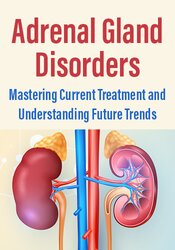
Adrenal Gland Disorders: Mastering Current Treatment and Understanding Future Trends

Test Template

Adrenal dysfunction can be classified into primary and secondary forms. Primary adrenal insufficiency, also known as Addison’s disease, occurs when the adrenal glands themselves are damaged and unable to produce sufficient hormones. Secondary adrenal insufficiency, on the other hand, results from a deficiency of adrenocorticotropic hormone (ACTH) from the pituitary gland, which stimulates the adrenal glands to product cortisol. Understanding the causes, symptoms, and treatment options for adrenal dysfunction is essential for healthcare professionals, patients, and caregivers.

Throughout this presentation, Dr. Langois will provide a comprehensive look at adrenal dysfunction, its impact on overall health, and the latest advancements in diagnosis and management, ultimately contributing to improved patient outcomes and quality of life. Numerous case studies will be used throughout this presentation to highlight key takeaways.

Here's What You'll Learn


Cushing Syndrome
  • Signs and symptoms
  • Laboratory data
  • Imaging data
  • Pharmacotherapy and mechanisms of action
    • 11-beta-hydroxylase inhibitor - Osilodrostat
    • Somatostatin analogs - Pasireotide
    • Adrenal steroid inhibitors – Metyrapone, ketoconazole
    • Glucocorticoid receptor antagonist - Mifepristone
    • Adrenolytic agents - Mitotane
    • Adrenal steroid inhibitor – Metyrapone, etomidate
    • Dopamine agonist - Cabergoline
  • Case study
Addison Disease
  • Signs and symptoms
  • Laboratory data
  • Chest radiogram
  • CT scan
  • Pharmacotherapy and mechanisms of action
    • Hydrocortisone
    • Prednisone
    • Dexamethasone
    • Fludrocortisone
  • Case study
Congenital adrenal hyperplasia
  • Signs and symptoms
  • Laboratory data
  • Pharmacotherapy and mechanisms of action
    • Corticosteroids
    • Fludrocortisone
    • Salt supplements
    • Anti-androgen
    • Growth hormone
  • Case study
Hyperaldosteronism
  • Signs and symptoms
  • Laboratory data
  • Pharmacotherapy and mechanisms of action
    • Eplereone
    • Lorundrostatt
  • Case study
Pheochromocytoma
  • Signs and symptoms
  • Laboratory data
  • Pharmacotherapy and mechanisms of action
    • Alpha-blockers – Phenoxybenzamine, Phentolamine, Prazosin
    • Beta-blockers – Nadolol, Atenolol, Metoprolol
  • Case study
Adrenal tumors
  • Signs and symptoms
  • Pharmacotherapy and mechanisms of action
    • Chemotherapy – Doxorubicin, Cisplatin, Etopdise, Azendra (Iodine 131)
    • Adrenolytic agent - Mitotane
  • Pharmacotherapy if adrenal glands are removed
    • Hydrocortisone
    • Prednisone
    • Dexamethasone

Everything You're Getting


  • More than 2 hours of video content
  • Up to 2.0 CE credits
  • Certificate of completion
  • Handouts and resources

Meet Your Experts


Paul Langlois, APN, PhD, CCRN, CCNS

Toggle speaker biography

Paul Langlois, APN, PhD, CCRN, CCNS, is a critical care clinical specialist in the surgical, medical, neurologic, burn, CCU, and trauma ICUs of Cook County Hospital, Chicago. Drawing on over 40 years of experience assessing and managing patients with life-threatening diseases, Dr. Langlois provides advanced-level training to nurses, nurse practitioners, physician assistants, respiratory therapists, and physicians.

Dr. Langlois is committed to providing the highest quality of care to patients through advanced education. His presentations are evidence-based, timely, and go beyond content review to sharpen the clinical reasoning underneath it, using illness scripts, anticipatory thinking, and layered case studies to help experienced clinicians reason out loud rather than simply recall answers. As a bedside clinical nurse specialist, he has developed several institution-wide protocols for the multidisciplinary assessment and management of patients.

His presentations are enthusiastically delivered and offer highly practical tips that help make the most challenging concepts easy to understand, from cognitive-bias traps that shape a shift to the SBAR calibration that gets a "come now" call heard the first time. Linking knowledge to clinical practice is the goal of every educational program, and Dr. Langlois builds that link through near-miss scenarios and "what would you do?" cases designed to sharpen judgment, not just test it.


Speaker Disclosures:
Financial: Dr. Paul Langlois has employment relationship with Cook County Hospital and Emergency Care Consultants. He receives a speaking honorarium and recording royalties from PESI, Inc. He has no relevant financial relationships with ineligible organizations.
Non-financial: Dr. Paul Langlois is a member of the American Nurses Association, the American Association of Critical Care Nurses, and the Society of Critical Care Medicine.

100% Satisfaction Guarantee

Register for this intensive training course without risk. If you're not completely satisfied, give us a call at 800-844-8260.

We’re that confident you'll find this learning experience to be all that's promised and more than you expected.

PESI App


Access CE trainings on your phone or tablet through our free mobile app. Choose video or audio-only versions of online courses from the world's best instructors, and complete your CE requirements anywhere, anytime, at your own pace.


Access for Self-Study (Non-Interactive)

Access never expires for this product.

Questions?

Visit our FAQ page at www.pesi.com/faq or contact us at www.pesi.com/info

Want this training for your whole team?

Get a customized training package for your team at a discounted rate!


Media Type:
Digital Seminar
Product Code:
POS078941
Duration:
2 hours, 2 minutes
Copyright:
May 15, 2025
Format:
Audio and Video

ADA Needs


We would be happy to accommodate your ADA needs; please call our Customer Service Department for more information at 1-800-844-8260.

Some text some message..
Back to Top
