
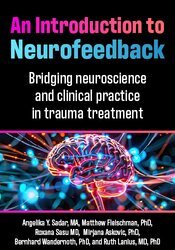
An introduction to Neurofeedback
Bridging Neuroscience and Clinical Practice in Trauma Treatment
- Speakers:
- Bernhard Wandernoth, PhD | Angelika Y. Sadar, MA, BCN, BCB-HRV | Matt Fleischman, PhD | Roxana Sasu, MD | Mirjana Askovic, PhD | Ruth Lanius, MD, PhD, FRCPC
- Duration:
- 3 Hours 04 Minutes
- Format:
- Audio and Video
- Copyright:
-
May 02, 2024
- Product Code:
- POS059889
- Media Type:
- Digital Seminar

Description
Understand what neurofeedback is, its history, how it works, how to implement it in your clinic, practice, or school, particularly when providing trauma-informed care.
Credit
Handouts/Brochure
| File type | File name | Number of pages | |
|---|---|---|---|
| Manual - An introduction to Neurofeedback (2 MB) | 14 Pages | Available after Purchase | |
| Transcript 1 (121.2 KB) | Available after Purchase | ||
| Transcript 2 (130.1 KB) | Available after Purchase |
Speaker

Bernhard Wandernoth, PhD Related seminars and products
Bernhard Wandernoth, PhD
An engineer in Zurich, Switzerland. Responsible for 18 years for research and development of advanced technologies for EEG-based diagnosis and treatment of mental disorders, especially biomarkers on cognitive evoked potentials and neurofeedback. Supports clinical trials and pilot projects for neurofeedback.
Speaker Disclosures:
Financial: Bernhard Wandernoth is the founder and chairman of the BEE Group AG. He receives a speaking honorarium and recording royalties from Psychotherapy Networker and PESI, Inc.
Non-financial: Bernhard Wandernoth has no relevant non-financial relationships.
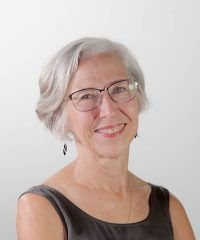
Angelika Y. Sadar, MA, BCN, BCB-HRV Related seminars and products
Angelika Sadar, MA, BCN, BCB-HRV, is a licensed psychologist who is board certified in both neurofeedback and heart rate variability and serves as a BCIA approved mentor in neurofeedback. With a private practice established in 1985 in the greater Philadelphia area, Sadar has dedicated her career to helping individuals of all ages and clinical presentations, including consulting with the US Air Force, professional sports teams, and residential treatment facilities.
As the neurofeedback coordinator for Trauma Research Foundation and a treatment coordinator at Sadar Psychological, Sadar has demonstrated her commitment to advancing the field and providing quality care to her patients. Her expertise has been recognized nationally, as she is a sought-after speaker who educates and trains other professionals in neurofeedback, biofeedback, and qEEG/ERP. She is the recipient of the prestigious Joel F. Lubar (2018) award and the AAPB Catalyst Leader award (2024), acknowledging her outstanding work and leadership in the field. In 2018, Sadar was invited to join BrainARC Switzerland, where she began developing evaluation protocols based on the research of HBImed, Switzerland.
Currently, Sadar’s clinical focus is on treating patients with complex and comorbid presentations, as well as consulting with other psychologists, medical practitioners, and clinicians regarding EEG, neurofeedback, and practice development. Her dedication to the field extends beyond her clinical work, as she serves as the executive director of the Northeast Region Biofeedback Society and has previously served as a board member at large of The Association of Applied Psychophysiology and Biofeedback.
Speaker Disclosures:
Financial: Angelika Sadar is the owner of Sadar Psychological and Sports Center. She is a consultant with the Trauma Research Foundation and has an employment relationship with the Northeast Region Biofeedback Society. She receives a speaking honorarium and recording royalties from PESI, Inc. She has no relevant financial relationships with ineligible organizations.
Non-financial: Angelika Sadar is a member of the Pennsylvania Psychological Association, the Association of Applied Psychophysiology and Biofeedback, and the International Society for Neuronal Regulation.
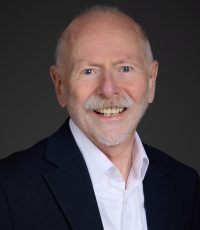
Matt Fleischman, PhD Related seminars and products
Matthew Fleischman, PhD, is a Licensed Psychologist in Eugene, Oregon. Matt was Principal Investigator on an NIMH grant on the implementation of behavioral family treatment programs in several protective services units in Oregon that achieved an 80% reduction in out-of-home placements. In 1989, he was introduced to neurofeedback by Dr. Gene Peniston, a pioneer in the field. Matt has taught in the US and abroad on the integration of neurofeedback and behavior therapy. Over the course of his career, he has worked with many modalities of neurofeedback including qEEG-based protocols, LENS, pirHEG, SMR/beta range trainings and Infra Low Frequency neurofeedback.
Financial: Dr. Matthew Fleischman is the founder and board chair of the Neurofeedback Advocacy Project. Dr. Fleischman also earns compensation as a trainer and consultant. He receives a speaking honorarium and recording royalties from PESI, Inc. Dr. Fleischman has no relevant financial relationships with ineligible organizations.
Non-financial: Dr. Matthew Fleischman is a member of the American Psychological Association and the Oregon Psychological Association.
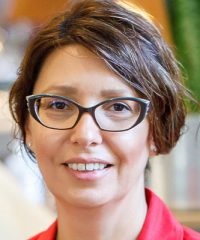
Roxana Sasu, MD Related seminars and products
Roxana Sasu, MD, has been a neurofeedback practitioner for 16 years. Since joining the field, she has taught and mentored over 5000 professionals world-wide, becoming a global expert in Infra-Low Neurofeedback. She is the executive director of the Neurofeedback Advocacy Project, a nonprofit brining neurofeedback to agencies working with underserved populations across the US. Roxana is also part of ongoing research and data collection for improving the efficacy of neurofeedback. Roxana authored two chapters in the book Restoring the Brain: Neurofeedback as an Integrative Approach to Health, where she discusses clinical aspects related to the use of neurofeedback in targeting symptoms associated with ADD and ADHD, respectively behavioral, developmental, and emotional dysregulations in the younger population. She also published an article in Frontiers for Human Neuroscience: "Infra-Low Frequency Neurofeedback in Persistent Postural-Perceptual Dizziness – Case Study" as part of the research topic "Endogenous Neuromodulation in the Infra-Low Frequency Regime."
Speaker Disclosures:
Financial: Roxana Sasu is the owner of Neurotopia LLC and is the executive director and director of education for the Neurofeedback Advocacy Project. She receives a speaking honorarium and recording royalties from PESI, Inc. Roxana has no relevant financial relationships with ineligible organizations.
Non-financial: Roxana Sasu has no relevant non-financial relationships.
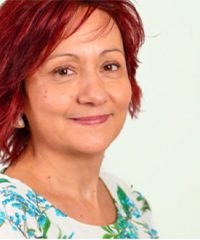
Mirjana Askovic, PhD Related seminars and products
Mirjana Askovic, PhD, is a senior psychologist with 30 years of clinical experience in mental health. She is the director of the Australian Neurofeedback Institute and is a pioneer in the application of Neurofeedback and Heart Rate Biofeedback in working with refugees affected by torture and trauma.
Speaker Disclosures:
Financial: Mirjana Askovic has employment relationships with Australian Neurofeedback Institute, University of Sydney, and NSW Service for the Treatment and Rehabilitation of Torture and Trauma Survivors. She receives a speaking honorarium from PESI, Inc. She has no relevant financial relationships with ineligible organizations.
Non-financial: Mirjana Askovic has professional relationships with Biofeedback Certification International Alliance and Applied Neuroscience Society of Australasia.
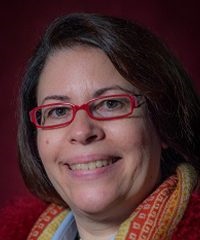
Ruth Lanius, MD, PhD, FRCPC Related seminars and products
Ruth Lanius, MD, PhD, FRCPC, Professor of Psychiatry, is the director of the posttraumatic stress disorder (PTSD) research unit at the University of Western Ontario. She established the Traumatic Stress Service and the Traumatic Stress Service Workplace Program, services that specialize in the treatment and research of Posttraumatic Stress Disorder (PTSD) and related comorbid disorders. She currently holds the Harris-Woodman Chair in Mind-Body Medicine at the Schulich School of Medicine & Dentistry at the University of Western Ontario.
Her research interests focus on studying the neurobiology of PTSD and treatment outcome research examining various pharmacological and psychotherapeutic methods. She has authored more than 100 published papers and chapters in the field of traumatic stress and is currently funded by several federal funding agencies. She regularly lectures on the topic of PTSD nationally and internationally She has recently published a book The Impact of Early Life Trauma on Health and Disease with Eric Vermetten and Clare Pain.
Speaker Disclosures:
Financial: Dr. Ruth Lanius has employment relationships with Western University of Canada, McMaster University, St. Joseph's Health Care, University of Western Ontario, Canadian Institute for Military and Veteran Health Research, Robarts Research Institute, and the Lawson Health Research Institute. She receives grants from MIND, the Trauma Research Foundation, and the Canadian Institute of Health Research. Dr. Lanius receives royalties as a published author. She receives a speaking honorarium, recording, and book royalties from PESI, Inc. She has no relevant financial relationships with ineligible organizations.
Non-financial: Dr. Ruth Lanius is a fellow with the American College of Neuropsychopharmacology, a member of the International Society for the Study of Dissociation, and the Ontario medical Association. She is a journal reviewer for several publications, to see a complete list contact PESI, Inc.
Additional Info
Access for Self-Study (Non-Interactive)Access never expires for this product.
Questions?
Visit our FAQ page at www.pesi.com/faq or contact us at www.pesi.com/info
Objectives
- Administer assessment techniques to learn how a client’s brain works, not just their diagnosis, to become intune with them and appropriately apply neurofeedback to help achieve training goals.
- Identify the difference between “big T” trauma and “little T” trauma and how they impact the underserved and most vulnerable communities.
- Explain how trauma impacts the brain’s ability to self-regulate.
- Justify how a multimodal treatment approach, including neurofeedback for children in schools can improve academic performance and social-emotional learning.
Outline
- Neurofeedback as an Adjunctive Therapy in the Treatment of Trauma
- Biofeedback
- Peripheral: EMG, temperature, heart rate variability
- Neurofeedback / neuromodulation
- A holistic approach
- Benefits
- History of neurofeedback
- Early pioneers in neurofeedback
- Evidence for neurofeedback in many indications
- Different forms of neurofeedback
- Traditional frequency based
- Alpha-theta training
- Infra-low (infra-slow) frequency training
- Learning theory / operant conditioning
- Healthy vs trauma
- Neurofeedack as a digital mirror
- Adverse Childhood Experiences (ACEs)
- Negatively affecting the brain
- Electrical and chemical systems of the brain
- Electrical activity
- Neurofeedback in clinical practice:
- Protocol, application, tracking
- Session duration and frequency
- Trauma Research Foundation’s Neurofeedback Training Program
- Biofeedback
- Treating Trauma with the Underserved and Most Vulnerable: Our Story, Your Story
- Trauma as the underlying cause of mental disorders
- Adverse Childhood Experiences (ACEs)
- Trauma’s impact on the brain
- The NAP Model
- Implementation
- Client population
- Neurofeedback avoids many treatment pitfalls
- Results for clients, therapists, agencies, society, insurers
- The Neurofeedback Advocacy Project (Roxana Sasu, MD, RN)
- NAP Neurofeedback Program
- NAP Neurofeedback Program
- 20 Years of Neurofeedback School Clinics: Path to Healing
- STARTTS - the NSW Service for the Treatment and Rehabilitation of Torture and Trauma Survivors
- Neurofeedback Program at STARTTS
- Biopsychosocial interventions and systemic approach
- Impact of refugee trauma on families
- Attachment shock, arousal, and sensory integration
- Symptoms of refugee children
- Referrals to neurofeedback clinic
- Interventions within a multidisciplinary team
- Biopsychosocial approach assessment model
- Changes seen in the brain due to trauma
- What is neurofeedback?
- Attuned neurofeedback
- Changes post neurofeedback treatment assessment
- Pre-post EEG
- Attention
- School
- Neurofeedback at schools
Target Audience
- Counselors
- Marriage and Family Therapists
- Physicians
- Social Workers
- Other Mental Health Professionals



Reviews
Satisfaction Guarantee
Your satisfaction is our goal and our guarantee. Concerns should be addressed to: PO Box 1000, Eau Claire, WI 54702-1000 or call 1-800-844-8260.
ADA Needs
We would be happy to accommodate your ADA needs; please call our Customer Service Department for more information at 1-800-844-8260.
PESI Mobile App
Access CE trainings on your phone or tablet through our free mobile app. Choose video or audio-only versions of online courses from the world’s best instructors, and complete your CE requirements anywhere, anytime, at your own pace.




Please wait ...