
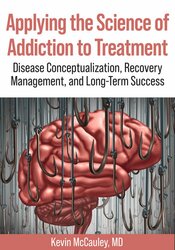
Applying the Science of Addiction to Treatment
Disease Conceptualization, Recovery Management, and Long-Term Success
- Speaker:
- Kevin McCauley, MD
- Duration:
- 1 Hour 30 Minutes
- Format:
- Audio and Video
- Copyright:
-
Oct 27, 2023
- Product Code:
- POS059601
- Media Type:
- Digital Seminar

Description
Research in neuroscience provides an evidence-based and comprehensive understanding of addiction that fits well with the experiences of people needing, seeking, and in recovery. There are several insightful and well-articulated arguments challenging the disease conceptualization of addiction, but two important areas of research – epigenetics and psychoneuroimmunology – greatly advance awareness of how environmental stress creates vulnerability to addiction.
This lecture reviews the most up-to-date science of addiction, the current arguments for and against addiction’s conceptualization as a disease, and how the principles of recovery management counter the pathophysiology of addiction and improve a recovering person’s chances of achieving long-term recovery.
Credit
Speaker

Kevin McCauley, MD Related seminars and products
The Meadows
Kevin McCauley, MD, is a senior fellow at Meadows Behavioral Healthcare. He first became interested in the treatment of substance use disorders while serving as a naval flight surgeon where he observed the US Navy’s policy of treating addiction as a safety (not a moral) issue, returning treated pilots to flight status under careful monitoring. Dr. McCauley wrote and directed two films: Memo to Self, exploring the concepts of recovery management, and Pleasure Unwoven, on neuroscience of addiction. He won the 2010 Michael Q. Ford Award for Journalism from the National Association of Addiction Treatment Providers.
As a person in long-term recovery himself, Dr. McCauley is grateful for the many benefits he received to establish his sobriety and strives to make sure that people have access to the same benefits and opportunities. He is committed to understanding how addiction plays out in the lives of people from diverse races and different cultures, genders, and orientations, and hearing their unique perspectives of recovery. Although addiction can be a debilitating disease personally and spiritually, Dr. McCauley joins with his colleagues to treat people seeking sobriety with respect, preserve their dignity, and accompany them as they find their own path into recovery.
Speaker Disclosures:
Financial: Kevin McCauley is the co-founder of the Institute for Addiction Study, has an employment relationship with Meadows Behavioral Healthcare, and receives a speaking honorarium from Imagine Recovery. He receives a speaking honorarium and recording royalties from PESI, Inc. He has no relevant financial relationships with ineligible organizations.
Non-financial: Kevin McCauley has no relevant non-financial relationships.
Additional Info
Access for Self-Study (Non-Interactive)Access never expires for this product.
For a more detailed outline that includes times or durations of time, if needed, please contact cepesi@pesi.com
Questions?
Visit our FAQ page at www.pesi.com/faq or contact us at www.pesi.com/info
Objectives
- Interpret Substance Use Disorder symptomology based on the latest neuroscientific explanations of substance use disorder pathophysiology.
- Analyze the arguments for and against the conceptualization of addiction as a brain disease.
- Summarize psychoneuroimmunology and explain its connection to substance use disorder.
- Outline the social determinants of health and explain the role they play in vulnerability to substance use disorder.
Outline
Addiction: A Disorder of Reward Learning, Decision-Making and Self-Awareness
- Definitions of addiction and disease
- Discrepant research findings that challenge the “disease model” of addiction
Recent Advances in the Pathophysiology of Addiction
- Epigenetics: A new understanding of heritability of addiction & recovery
- Psychoneuroimmunology: The gut-brain-immune loop
The Five Current, Leading Neuroscientific Explanations of Addiction
- Genetic vulnerability
- Dopamine and reward processing
- Pathology of memory and learning
- Stress and the “Dark Side” of addiction (Koob and LeMoal)
- Pathology of motivation and Choice (Volkow, Goldstein)
The Implications of a Disease of Volition
- Avoiding relapse with a broken risk processor
- Recovery Management as risk management
- Evidence-base for AA
- What aviation safety programs can teach us about recovery
- The Social Determinants of Choice
Target Audience
- Addiction Professionals
- Case Managers
- Licensed Clinical/Mental Health Counselors
- Social Workers
- Marriage & Family Therapists
- Psychologists



Reviews
Satisfaction Guarantee
Your satisfaction is our goal and our guarantee. Concerns should be addressed to: PO Box 1000, Eau Claire, WI 54702-1000 or call 1-800-844-8260.
ADA Needs
We would be happy to accommodate your ADA needs; please call our Customer Service Department for more information at 1-800-844-8260.
PESI Mobile App
Access CE trainings on your phone or tablet through our free mobile app. Choose video or audio-only versions of online courses from the world’s best instructors, and complete your CE requirements anywhere, anytime, at your own pace.




Please wait ...