
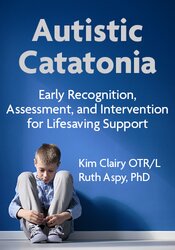
Autistic Catatonia: Early Recognition, Assessment, and Intervention for Lifesaving Support
- Speakers:
- Kimberly J. Clairy, OTR/L | Ruth Aspy, PhD
- Duration:
- 1 Hour 30 Minutes
- Format:
- Audio and Video
- Copyright:
-
Feb 14, 2025
- Product Code:
- POS150228
- Media Type:
- Digital Seminar

Description
Autistic catatonia is a severe yet often overlooked condition that affects 12–20% of autistic individuals. Characterized by a striking departure from baseline functioning, autistic catatonia presents in two seemingly opposite ways—immobility (“stuck”) and agitation. These shifts impact posture, movement, speech, mood, and behavior, making early recognition and intervention critical. Without timely and appropriate support, autistic catatonia can become increasingly entrenched, making recovery more difficult.
In this essential training, you’ll gain clinical insights from both firsthand lived experience and professional expertise. Learn to identify the early signs of autistic catatonia, apply validated screening tools, and implement intervention strategies that may seem counterintuitive yet are highly effective. With the right approach, professionals and caregivers can help prevent worsening symptoms and support autistic individuals in regaining stability.
Credit
Handouts/Brochure
| File type | File name | Number of pages | |
|---|---|---|---|
| Illinois Educators Self-Study Instructions (15.4 KB) | 1 Pages | Available after Purchase | |
| Illinois Educators Evaluation Form.pdf (1.2 MB) | 1 Pages | Available after Purchase | |
| ASHA Instructions - Self Study (64.4 KB) | Available after Purchase | ||
| Manual - Autistic Catatonia (3.3 MB) | 83 Pages | Available after Purchase | |
| Manual - Autistic Catatonia - French (3.3 MB) | 83 Pages | Available after Purchase | |
| Manual - Autistic Catatonia - Italian (3.3 MB) | 83 Pages | Available after Purchase |
Speaker

Kimberly J. Clairy, OTR/L Related seminars and products
Autism out of the Box LLC
Kim Clairy, OTR/L, is an autistic occupational therapist, international speaker, consultant, author, and self-advocate. Diagnosed with autism, Kim learned to break through personal and societal barriers, including navigating the healthcare system with ASD and an eating disorder. Her experiences forged a passion for educating others on autism with the hope of helping give voice to those unable to articulate their inner worlds. Using personal and professional experiences, Kim educates on many facets of autism across the lifespan including eating disorders, trauma, mental health, ADHD, intimacy, relationships, self-awareness, problem-solving through challenging behaviors, and much more!
Speaker Disclosures:
Financial: Kimberly Clairy has an employment relationship with Autism Out of the Box LLC. She receives a speaking honorarium and recording royalties from PESI, Inc. She has no relevant financial relationships with ineligible organizations.
Non-financial: Kimberly Clairy is autistic and has friends and colleagues who are autistic. She is on the executive board of Milestones Conference committee. She has a professional relationship with the Ziggurat Group.

Ruth Aspy, PhD Related seminars and products
Ruth Aspy, PhD, is a licensed psychologist specializing in transdisciplinary assessment and intervention for individuals on the spectrum. She is co-author of a comprehensive model of intervention, The Ziggurat Model, which earned the Literary Achievement Award from the Autism Society. Dr. Aspy has provided training and consultation throughout the United States and internationally. She serves on the Autism Society of America’s Panel of Professional Advisors. Her focus is on understanding the underlying characteristics of autistic individuals keeping their neurological/brain differences in mind. Dr. Aspy believes that kindness is at the heart of all good support strategies. She has an emphasis on working with females on the spectrum and with those individuals who have symptoms of catatonia.
Speaker Disclosures:
Financial: Dr. Ruth Aspy has employment relationships with the Ziggurat Group and the Ohio Center for Autism and Low Incidence. She receives royalties as a published author. Dr. Aspy receives a speaking honorarium and recording royalties from PESI, Inc. She has no relevant financial relationships with ineligible organizations.
Non-financial: Dr. Ruth Aspy is a member of the Autism Society of America Panel of Professional Advisors.
Additional Info
Access for Self-Study (Non-Interactive)Access never expires for this product.
For a more detailed outline that includes times or durations of time, if needed, please contact cepesi@pesi.com.
Questions?
Visit our FAQ page at www.pesi.com/faq or contact us at www.pesi.com/info
Objectives
- Apply knowledge of common catatonia screeners to select the appropriate assessment for autistic individuals
- Utilize the concept of departure from baseline to recognize the onset of catatonia
- Identify the onset of catatonia from the departure of baseline
- Design strategies to address specific needs for agitated or immobility in autistic catatonia
Outline
Introduction to catatonia in autism
- Lived experiences in autistic catatonia
- Prevalence and onset
- Trauma and stress in autistic catatonia
- Possible impact of Covid
- Physiological neuronal differences in autistic catatonia
- Catatonia as an autism diagnosis-autism specifier in DSM 5-TR
- What are catatonia characteristics in DSM 5-TR
- Dangers of unidentified autism catatonia and mortality rate
Autism catatonia subtypes
- Chronic Catatonia and Catatonia–Type Deterioration and Breakdown
- Acute Catatonia (general)
- Catatonia as Shutdown
- Episodic/lifelong
Clinical manifestations of autism catatonia
- Overlap of autism and catatonia
- Departure from baseline
- Opposing clinical features
- Alternation
- Waxing and Waning
- Stupor
Evaluations and screeners for autism catatonia
- Autism Catatonia Evaluation (ACE-S)
- Busch-Francis Catatonia Rating Scale
- Catatonia indicators in the Underlying Characteristic Checklist (UCC) in the Ziggurat Model
Case examples and Lived experiences
- What catatonia looks like
- What catatonia feels like
- Autism catatonia vs sensory overload, stress, and burnout
- Intermittent catatonia
- Malignant catatonia
- Acute catatonia
Treatment strategies and interventions for autism catatonia
- Risks and limitations of research and techniques
- Medical treatment approaches
- Psycho-Ecological approach
- Applying the Ziggurat Model to support autistic people with catatonia
Common questions and answers
Target Audience
- Licensed Clinical/Mental Health Counselors
- Psychologists
- Social Workers
- Occupational Therapists
- Occupational Therapy Assistants
- Physical Therapists
- Physical Therapist Assistants
- Speech-Language Pathologists
- Teachers/School-Based Personnel
- Dieticians
- Marriage & Family Therapists
- Addiction Professionals
- Case Managers
- Nurses
- Nursing Home/Assisted Living Administrators
- School Administrators
Reviews
Satisfaction Guarantee
Your satisfaction is our goal and our guarantee. Concerns should be addressed to: PO Box 1000, Eau Claire, WI 54702-1000 or call 1-800-844-8260.
ADA Needs
We would be happy to accommodate your ADA needs; please call our Customer Service Department for more information at 1-800-844-8260.
PESI Mobile App
Access CE trainings on your phone or tablet through our free mobile app. Choose video or audio-only versions of online courses from the world’s best instructors, and complete your CE requirements anywhere, anytime, at your own pace.




Please wait ...