“I need to lose weight.”
It’s a sentence that stops therapists in their tracks.
But beneath it lives shame, trauma, and a lifetime of unspoken stories.
When it comes to food, weight, and body image, the stakes are high. Most of us weren’t trained for this – or we’ve absorbed harmful ideas about “health” without even realizing it.
Some clients ask for weight loss.
Others are stuck in cycles of restriction or silence.
Many carry body grief that never gets named.
And you’re left wondering:
How do I support a person’s health and well-being without reinforcing harm?
How do I stay in my lane – but still show up for what’s real?
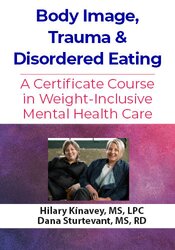
That’s why we’ve partnered with Hilary Kinavey, MS, LPC, and Dana Sturtevant, MS, RD – founders of the Center for Body Trust and authors of Reclaiming Body Trust.
This clinical intensive will highlight how we support health and well-being, without shame, stigma, or scripts that don’t fit.
You’ll walk away with:
- Strategies to respond to weight-loss requests without reinforcing harm
- Shame-sensitive, weight-inclusive interventions that work
- Approaches for clients stuck in cycles of restriction or body grief
- A clear shift from body blame to body trust
- A certificate in trauma-informed, weight-inclusive care
Earn your certificate – a powerful entry into the larger Body Trust approach and community – and start practicing in a way that’s truly inclusive, trauma-informed, and effective.
Purchase now!