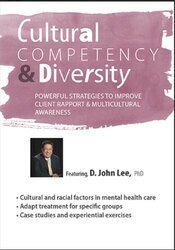
A Message from Your Speaker
I was raised in Vancouver, British Columbia, during an era when Canadians embraced the value of being a multicultural nation. I remember in college spending a semester studying French in Quebec City and experiencing what it is like to be a “fish out of water.” When I moved to the United States as a graduate student to study cross-cultural counseling, I had to learn how Americans think about diversity.
Now, after 35 years of research, teaching, consulting, and clinical work in the USA, I have a keen understanding of the challenges of providing mental health services in a multicultural and diverse society.
When you watch this training, I will outline the knowledge, awareness and skills that clinicians should develop in order to work ethically, efficiently, and effectively with people from different cultures and ethnic groups. Your confidence will grow as you will learn:
- The challenges of cultural competency.
- The need to build rapport and anticipate points of possible resistance.
- Empirically-validated self-assessments to evaluate your strengths and growth areas, as well as design a professional development plan.
You may just want to watch this training to receive 3 CE hours of cultural competency and 3.25 CE hours of ethics. But, I guarantee you will leave with so much more. This highly engaging and experiential training will challenge you to explore the intersection of your belief systems with your clinical work and allows you to become more confident as a culturally sensitive clinician.
Gain a reputation in your community for being the premier therapist for working with diverse clients!