
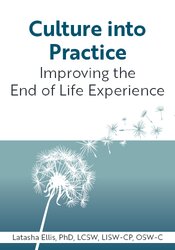
Culture into Practice
Improving the End of Life Experience
- Speaker:
- Latasha Ellis, PhD, LCSW, LISW-CP
- Duration:
- 3 Hours
- Format:
- Audio and Video
- Copyright:
-
Oct 19, 2023
- Product Code:
- POS078702
- Media Type:
- Digital Seminar

Description
Death is a natural part of the life. The process of dying is as important as the birthing process and all other stages of life. With unique backgrounds, values, and beliefs, individuals bring different needs and expectations to the dying process. It is imperative that healthcare professionals understand, value, and deliver end of life care that is unique to each patient and their family.
Culture plays a significant role in how individuals view themselves and their role in the family and the world around them. Therefore, patients’ approach to illness and death is directly impacted by cultural factors. End of life care should be personalized with the patient’s cultural factors in mind. This webinar will provide important factors and practices to consider when delivering culturally responsive end of life care.
Credit
Handouts/Brochure
| File type | File name | Number of pages | |
|---|---|---|---|
| Manual - Culture into Practice Improving the End of Life Experience (13.1 MB) | 36 Pages | Available after Purchase |
Speaker
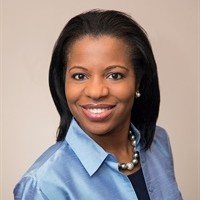
Latasha Ellis, PhD, LCSW, LISW-CP Related seminars and products
Latasha Ellis, PhD, LCSW, LISW-CP, is a Licensed Clinical Social Worker, entrepreneur, and educator with over 24 years of post-graduate experience in the field of medical social work and mental health. For over 16 years, she has committed her career to working in an acute care hospital serving patients with chronic illness, more specifically patients with end stage renal disease, cancer, cardiac disease, and chronic lung disease. During her tenure, she developed the hospital’s psychosocial oncology program which provides programs and services to assist oncology patients in adjusting to the emotional challenges of a cancer diagnosis. Currently, Dr. Ellis serves as a regional mental health director for a national advanced primary care company. In this role, she works closely with primary care providers to develop collaborative care programs to help patients manage chronic illness, understand advanced care planning, and bridge the gap between physical and emotional health.
Dr. Ellis values the impact of culture on healthcare practices, outcomes, and the patient-provider relationship. Her research titled, Culture in Practice: African American Doctor-Patient Dyad, explored the subjective experience of African American general practitioners as they treated same race patients with depression.
In addition to her clinical experience, Dr. Ellis is a faculty member at the University of North Carolina-Charlotte. She has also presented live seminars on topics like “Managing Challenging Patient and Family Behaviors” and “Challenging Geriatric Behaviors.”
Dr. Ellis holds a Bachelor of Social Work (BSW) degree from Morgan State University, a Master of Social Work (MSW) degree from the University of Maryland at Baltimore, and a Doctor of Philosophy (PhD) from the Institute for Clinical Social Work in Chicago, Illinois. Dr. Ellis also holds a Certificate of Clinical Supervision from the National Association of Social Workers, and a Certificate in Integrated Behavioral Health in Primary Care from the University of Michigan School of Social Work.
Speaker Disclosures:
Financial: Latasha Ellis maintains a private practice and has employment relationships with Marathon Health, University of North Carolina-Charlotte, and Walden University. She receives a speaking honorarium, recording royalties, and a consulting fee from PESI, Inc. She has no relevant financial relationships with ineligible organizations.
Non-financial: Latasha Ellis is a member of the American Association of Psychoanalysis in Clinical Social Work, the Association of Oncology Social Workers, and the National Association of Social Workers.
Additional Info
Access for Self-Study (Non-Interactive)Access never expires for this product.
Questions?
Visit our FAQ page at www.pesi.com/faq or contact us at www.pesi.com/info
Objectives
- Evaluate culture and culture humility for individual patient considerations.
- Analyze major categories of cultural influence on end-of-life beliefs and decisions.
- Explore how culture impacts the end-of-life experience.
- Discuss practice considerations to improve patients' end-of-life experiences while honoring cultural preferences.
- Determine the impact of social determinants of health on the quality of comfort care and end-of-life.
Outline
Improving the End-of-Life experience
- Cultural care considerations
- Culture
- Culture humility
- Provider’s self-assessment
- Categories of cultural influence (understanding values, belief, preferences of EOL care)
- Race/ethnicity
- Religion
- Geographical region
- Socio-economic status
- Social drivers of health
- Education access and quality
- Access to quality healthcare
- Economic stability
- Social and community context
- Neighborhoods and built environments
Exploring the patient’s end of life preferences
- Preparing for your death experience.
- Meaning and purpose (Viktor Frankel)
- Dying gracefully
- Family dynamics
- Leaving a legacy
Reviews
Satisfaction Guarantee
Your satisfaction is our goal and our guarantee. Concerns should be addressed to: PO Box 1000, Eau Claire, WI 54702-1000 or call 1-800-844-8260.
ADA Needs
We would be happy to accommodate your ADA needs; please call our Customer Service Department for more information at 1-800-844-8260.
PESI Mobile App
Access CE trainings on your phone or tablet through our free mobile app. Choose video or audio-only versions of online courses from the world’s best instructors, and complete your CE requirements anywhere, anytime, at your own pace.




Please wait ...