Not Found
Digital Seminar

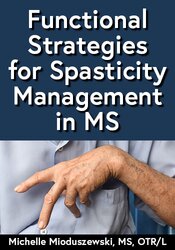
Functional Strategies for Spasticity Management in MS


Speaker:
Michelle Mioduszewski, MS, OTR/L
Duration:
Approx 2 hrs
Format:
Audio and Video
Copyright:
Apr 25, 2025
Product Code:
POS065603
Media Type:
Digital Seminar

Choose a price item
Choose additional price

Description

Spasticity is one of the most challenging and limiting symptoms for patients with MS, significantly impacting mobility, daily function, and quality of life. This session provides you with actionable tools to assess, manage, and reduce the impact of spasticity while promoting functional independence and improving patient outcomes.

Led by Michelle Mioduszewski, MS, OTR/L, a renowned expert in neurological rehabilitation, this session combines her extensive experience with her specialized focus on MS care.

  • Identify triggers that exacerbate spasticity
  • Implement functional positioning techniques to improve comfort, reduce contracture risk, and support ADL performance
  • Develop individualized management plans that incorporate stretching, adaptive equipment and assistive technology
  • Leverage advanced therapeutic tools to foster participation in meaningful activities

This session equips you with the skills and confidence to navigate the complexities of spasticity management, empowering you to deliver care that transforms your patient’s mobility, independence, and quality of life.

Credit

Speaker

Michelle Mioduszewski, MS, OTR/L's Profile

Michelle Mioduszewski, MS, OTR/L Related seminars and products

Niagara Therapy, LLC


Michelle Mioduszewski, MS, OTR/L, has been practicing occupational therapy in acute, inpatient rehabilitation, and outpatient settings throughout her career. Visual rehabilitation following neurological events has been an area of focus. Michelle owns and operates Niagara Therapy, LLC, a team-oriented practice based in Erie, PA that offers OT, PT, and SLP to adults and children with neurological concerns. She also consults for legal, education, and professional situations.

Michelle is the AOTA Administration and Management Chairperson for the Rehabilitation and Disability Special Interest Section, National MS Society Board of Trustees, and is a National MS Society Partner in Care Designation. She was trained in NDT and Neuro-IFRAH (NDTC), Bioness Certified, REO Certified, SAEBO Certified, and specialized in vision and cognitive rehabilitation. A published writer by AOTA Press, she also teaches on topics such as IASTM, Neuro-Rehab/Neuro-Handling, vision, cognition, spasticity, ergonomics and complex wheelchair evaluations.

Speaker Disclosures:
Financial: Michelle Mioduszewski is the owner of Niagara Therapy, LLC and Niagara Therapy Professional Services, LLC. She is a book reviewer for Slack. Michelle also receives a speaking honorarium and recording royalties from PESI, Inc. Michelle Mioduszewski has no relevant financial relationships with ineligible organizations.
Non-financial: Michelle Mioduszewski is a member of AOTA/POTA and the Consortium of MS Centers. She is a POTA representative to Trialliance Group and also serves on the National Multiple Sclerosis Association Board of Trustees. She is part of the National MS Society, serving as an MS Ambassador and a member of their Clinical Healthcare Advisory Committee.


Additional Info

Access for Self-Study (Non-Interactive)

Access never expires for this product.


For a more detailed outline that includes times or durations of time, if needed, please contact cepesi@pesi.com


Questions?

Visit our FAQ page at www.pesi.com/faq or contact us at www.pesi.com/info


Objectives

  1. Identify and address spasticity triggers to enhance patient comfort, improve mobility, and reduce barriers to performing ADLs.
  2. Implement functional positioning strategies to minimize contracture risk and support effective participation in daily activities and therapeutic interventions.
  3. Design individualized spasticity management plans that incorporate stretching, adaptive equipment, and assistive technology to maximize functional independence and engagement in meaningful activities.

Outline

Cracking the Code: Understanding Spasticity in MS
Explore the foundations of spasticity management, focusing on the why” behind this complex symptom and its functional implications
  • The science of spasticity: What’s happening beneath the surface?
  • Triggers and patterns: How to identify what exacerbates spasticity
  • The impact on mobility, ADLs, and patient independence
  • Differentiating spasticity from other movement dysfunctions
Tools of the Trade: Evaluation Strategies That Drive Results
Learn how to assess spasticity with precision and connect findings to real-world functional goals
  • Functional assessments: Measuring spasticity’s impact on daily life
  • Spotting hidden triggers: Fatigue, positioning, and environmental factors
  • Case studies: Evaluation techniques in action
Taming the Beast: Advanced Treatment Techniques
Discover actionable, evidence-based strategies to manage spasticity and maximize functional outcomes
  • Functional positioning to prevent contractures and improve comfort
  • Incorporating stretching, manual therapy, and therapeutic exercises
  • Adaptive equipment: Braces, splints, and seating systems that make a difference
  • Progressive strategies for real-time symptom adaptation and management. Review the basics of pharmacological education to assist clients in advocating for themselves and having realistic expectations
Beyond the Clinic: Empowering Patients for Lasting Success
Equip your patients with the tools and confidence to manage spasticity independently and maintain functional gains
  • Practical tips for life management of spasticity
  • Building sustainable management plans tailored to individual needs
  • Engaging patients in meaningful activities and goal-setting
  • Educating patients and families on adaptive strategies and equipment use
  • Breaking barriers: Addressing insurance concerns and patient resistance

Target Audience

  • Athletic Trainers
  • Chiropractors
  • Occupational Therapists
  • Occupational Therapy Assistants
  • Physical Therapists
  • Physical Therapy Assistants

Reviews

Satisfaction Guarantee
Your satisfaction is our goal and our guarantee. Concerns should be addressed to: PO Box 1000, Eau Claire, WI 54702-1000 or call 1-800-844-8260.

ADA Needs
We would be happy to accommodate your ADA needs; please call our Customer Service Department for more information at 1-800-844-8260.

PESI Mobile App

Access CE trainings on your phone or tablet through our free mobile app. Choose video or audio-only versions of online courses from the world’s best instructors, and complete your CE requirements anywhere, anytime, at your own pace.

https://cdn.pesi23.com/images/android.png     https://cdn.pesi23.com/images/iphone.png

Please wait ...

Back to Top