ERP is evidence-based, supported by decades of research, and widely trusted in treating anxiety, OCD, panic disorders, PTSD and agoraphobia.
Why is it so effective?
Because ERP doesn’t rely on coping skills that offer quick relief but accidently reinforce the avoidance that keeps fear going.
Instead, ERP helps clients lean into fear, face it with strength and learn they can trust themselves to handle hard things …
… all in a way that feels doable, supported and empowering.
It’s why tens of thousands of clinicians count on it … and it’s why you need it in your treatment toolbox.
Now in this 2-day workshop you’ll learn to use ERP from start to finish.
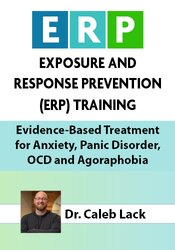
You’ll join Dr. Caleb Lack, clinical psychologist and faculty member for the International OCD foundation’s Behavior Therapy Training Institute.
He specializes in using ERP across a wide range of clinical presentations and has taught thousands of therapists how to use it over the past 20 years.
He’ll show you a step-by-step path with detailed instruction, demonstrations, and practical real-world applications.
No confusion, No overwhelm, Just practical training that will leave you ready to:
- Build targeted exposure plans that go straight to the core of what maintains fear
- Spot subtle avoidance and safety behaviors in clients
- Use interoceptive, imaginal, and in vivo exposures in a way that feels safe, doable and effective
- And much more!
And if you’re worried that exposure might feel “too hard” for your clients or yourself … don’t be.
Dr. Lack will show you how to deliver ERP in a way that’s safe, manageable and compassionate – so you’ll be guiding clients at a pace that helps them without overwhelming them.
Whether you’re completely new to ERP, or have previous training, this program is sure to add value to your practice …
So don’t wait.
Register now!