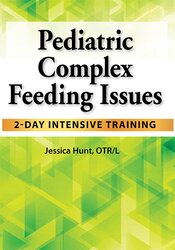
Children do not present with one area of difficulty when it comes to feeding – it is typically a mix of behavior, sensory and oral-motor issues. As a result, we need to learn how to adjust on the fly when a child throws us a curveball in a session that doesn’t fit with our treatment plan.
In this 2-day seminar, I will show you how to use a roadmap to navigate the muddy waters of feeding and learn how to seamlessly move between sensory, motor and behavior strategies to create the best-individualized treatment plan for each child.
Through video case examples, I will show you treatment strategies, and hands-on exercises to gain the knowledge needed to successfully treat feeding difficulties.
You’ll walk away with advanced techniques to:
- Evaluate the causes of mealtime difficulties: behavior, sensory, oral motor, or a combination
- Increase the range of foods, decrease rigidity around mealtimes
- Increase jaw strength and decrease ineffective lip closure, or poor tongue lateralization
- Use deep breathing and proprioceptive input to address self-regulation at the table
- Educate parents and caregivers to promote carryover at home
- Increase self-regulation around feeding
- Increase food play and exploration to increase food acceptance
Don’t miss out! Come watch me to learn how to put all the pieces together for children with complex feeding issues.