
Physiological Optics: An Introduction to Human Sight and Vision
- Speaker:
- Charles Boulet, BSc, BEd, OD
- Duration:
- 6 Hours 14 Minutes
- Format:
- Audio and Video
- Copyright:
-
May 02, 2023
- Product Code:
- POS065333
- Media Type:
- Digital Seminar

Description
Physiological optics is how the brain uses the eyes to create clear, aligned imaging for downstream processing – and the challenges it faces in making this happen. Where there is a visual impediment due to trauma or development, visual signal acquisition will be affected and in turn degrades downstream processing. If you consider all that is connected to vision, you’ll start to get an idea of what this can mean: Cognition, Affect / Emotional Function, Fine Motor Control, Gross Motor Coordination, Locomotion, Balance, Orientation / Motor Reflex Responses, Obstacle / Threat Avoidance – it’s everything!
- Advance your understanding of human vision and how it plays into the work you do.
- Learn about sight (visual signal acquisition), glasses, and how these affect behavior, learning, and rehabilitation.
- How people receive light naturally and what it is like to have nearsight, farsight, astigmatism, and more.
- What our eyes do to try to accommodate for any lack of clarity.
- How this affects us in daily life and in clinic.
- What can and should be done about it, accounting for purpose and age.
Vision is a complex neurological experience the most complex sensory experience. Explore a down to earth introduction to refraction, how we focus light with our eyes to see the world clearly – and what happens when things go awry.
Credit
Speaker
Charles Boulet, BSc, BEd, OD Related seminars and products
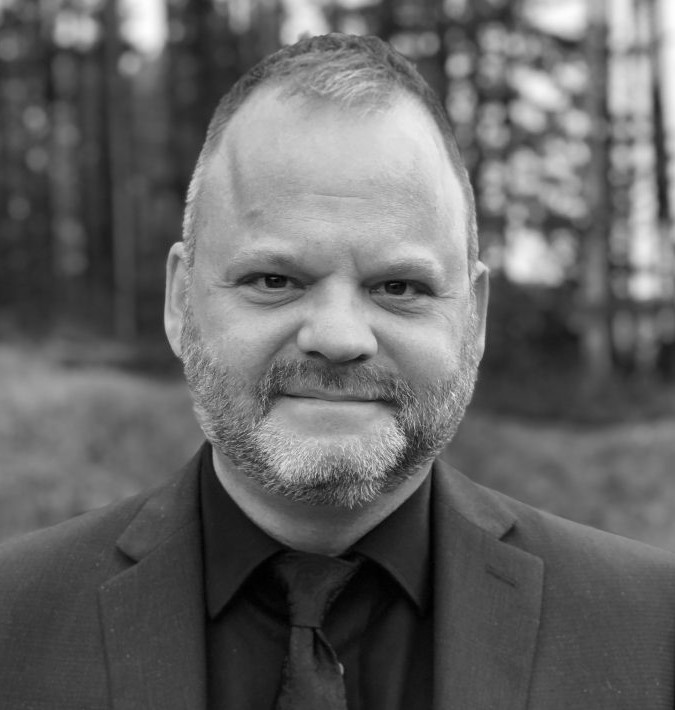
Charles Boulet, BSc, BEd, OD, is an optometrist, author, and expert in visual neurorehabilitation, with a focus on conditions such as amblyopia, strabismus, and eye movement disorders. A passionate advocate for accessible vision care, he played a pivotal role in developing and promoting Alberta’s Child Vision Assessment Act, which sought to ensure universal vision exams for children.
Beyond his clinical work, Dr. Boulet is deeply involved in research and global advocacy, collaborating with professionals worldwide. He has published numerous articles and developed a growing library of online resources to educate healthcare providers, therapists, and educators about vision science and rehabilitation.
Through his workshops and teaching, Dr. Boulet equips professionals with practical tools to address visual dysfunction in rehabilitation. When not working, he enjoys photography, hiking, music, and engaging with community arts.
Speaker Disclosures:
Financial: Dr. Charles Boulet maintains a private practice and has an employment relationship with Vision Mechanic.net. He receives royalties as a published author. Dr. Boulet receives a speaking honorarium and recording royalties from PESI, Inc. He has no relevant financial relationships with ineligible organizations.
Non-financial: Dr. Charles Boulet has no relevant non-financial relationships.
Additional Info
Access for Self-Study (Non-Interactive)Access never expires for this product.
Questions?
Visit our FAQ page at www.pesi.com/faq or contact us at www.pesi.com/info
Objectives
- Analyze the impact of visual signal acquisition on occupational performance.
- Differentiate between the essential refractive conditions: nearsightedness, farsightedness, astigmatism, anisometropia, aniseikonia, presbyopia.
- Evaluate the neurophysiological basis of vision on occupational engagement.
- Examine the impact of sensory attention on occupational performance.
- Apply practical understanding of eye charts and glasses prescriptions to occupational scenarios.
- Develop individualized strategies for visual impediments in occupational contexts.
- Integrate knowledge of vision into care plan development.
Outline
Visual Signal Acquisition – Finding What is Important
- The mechanical side to vision
- Pursuits
- Saccades
- Vergence
- Versions
- Fixation
- Posture
- Alignment
- Focus/Accommodation
- Central vs. peripheral awareness
- Eyesight/refractive state
Visual Signal Processing – Making Sense of What is Seen
- Visual discrimination
- Visual memory
- Spatial relationships
- Form constancy
- Sequential memory
- Figure-ground
- Visual closure
- Spatial awareness
- Visualization
Neurophysiology of Vision
- Emmetropia
- Astigmatism
- Hyperopia
- Myopia
- Presbyopia
- Anisometropia
Sensory Attention
- Eyesight vs. vision – a behavioral perspective
Eye Charts & Glasses Prescriptions
- 20/20 and the Limits of Human Sight
- Sphere, astigmatism and auto-refractor examples
Target Audience
- Physical Therapist
- Physical Therapist Assisstant
- Occupational Therapist
- Occupational Therapist Assisstant
- Doctors of Optometry
- Athletic Trainer
Reviews
Satisfaction Guarantee
Your satisfaction is our goal and our guarantee. Concerns should be addressed to: PO Box 1000, Eau Claire, WI 54702-1000 or call 1-800-844-8260.
ADA Needs
We would be happy to accommodate your ADA needs; please call our Customer Service Department for more information at 1-800-844-8260.
PESI Mobile App
Access CE trainings on your phone or tablet through our free mobile app. Choose video or audio-only versions of online courses from the world’s best instructors, and complete your CE requirements anywhere, anytime, at your own pace.




Please wait ...