Digital Seminar

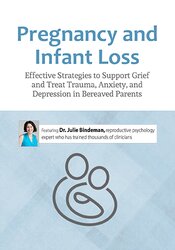
Pregnancy and Infant Loss

$249.99 Standard

There is a vast silence around pregnancy and infant loss in our society. And it extends to clinical training programs. 

Most therapists are not even aware of the field of reproductive psychology, never mind trained in it. Yet, all clients have a reproductive story of some kind, and that story often includes loss.

How would you take care of a client who is trying to decide if she has a right to her grief after a miscarriage?

How would you modify trauma treatment for a client who has PTSD after delivering a stillborn baby and wants to become pregnant again?

How would you advise a couple whose relationship is crumbling as their infant is sent to palliative care in the NICU?

There are numerous ways that pregnancy can result in tragedy, and while it may be tempting to see these as rare events that you are unlikely to encounter in your practice, it is much more likely that your clients already have or will experience a pregnancy or infant loss – though they may not be talking about it.

During this dynamic 1-day training with reproductive psychology expert Dr. Julie Bindeman, you will learn how to create a safe, therapeutic space for grieving parents. You’ll get the skills you need to: 

  • Help clients integrate the experience of loss into their reproductive stories 
  • Tailor your existing treatment strategies - like CBT and ACT - to pregnancy and infant loss situations 
  • Intervene with the family system and stop relationship conflict from taking over 
  • Effectively manage countertransference reactions related to your own reproductive experience 

 What is not talked about is harder to bear. Now you can fill a training gap and be ready to help your clients experiencing pregnancy and infant loss. Register today! 

Here's What You'll Learn


Gradations of Grief: Types of Early Bereavement

  • Intake assessment strategies for obtaining reproductive information 
  • Nuances of loss in early pregnancy - miscarriage, ectopic pregnancy, abortion, medical termination, stillbirth 
  • Developmental tasks of pregnancy and how loss interrupts them 
  • Coping with NICU admission and neonatal death 
  • Medical factors facing bereaved parents 
  • Infertility grief 
  • Disenfranchised grief - the loss of possibility and what could have been  

Tools to Help Grieving Parents and their Communities 

  • Individual, couple, and family phases of grief - and when to be concerned 
  • Living children and loss 
  • Clinical management of higher rates of relationship conflict and divorce after loss 
  • Distinguish grief versus postpartum depression 
  • Language around loss - key things to say and not to say 
  • How culture supports or does not support grief and loss 
  • Best practices for managing grief milestones and establishing mourning rituals 
  • Grief management during subsequent attempts to conceive 

Therapy after Pregnancy and Infant Loss

  • Exploring clients’ reproductive journey and narrative 
  • Crisis interventions to help shift clients out of shock  
  • Stabilization phase - resourcing tools to manage the expected flood of emotions  
  • Tailor existing evidence-based interventions to this clinical situation 
    • Cognitive strategies for assisting parents with neutralizing shame and self-blame 
    • Behavioral techniques to manage loss-related triggers 
    • Mindfulness and values-based interventions to assist parents with creating meaning  
    • Trauma processing techniques for resolving PTSD-related symptoms 
  • Clinical strategies to support bereaved parents during subsequent pregnancies and the postpartum period after loss 
  • How and when to end therapy when pregnancy or infant loss was the presenting problem 

Clinical Considerations 

  • Therapeutic use and management of countertransference  
  • Self-care and burnout protection for therapists’ whose own symptoms or grief is activated  
  • Moral injury around limited resource availability  
  • Establishing cultural competency - inclusive practices for all individuals and family systems 
  • When and how to refer to couples therapy and support groups 
  • Research limitations and potential risks 

Everything You're Getting


  • More than 6 hours of video content
  • Up to 6.25 CE credits
  • Certificate of completion
  • Handouts and resources

Meet Your Experts


Julie Bindeman, PsyD

Toggle speaker biography

Julie Bindeman, PsyD, pursued intensive training in the field of reproductive psychology, in which she writes, teaches, and practices, as a result of her own reproductive story. Dr. Bindeman has served on the American Society for Reproductive Medicine’s mental health professional group, including on the executive, continuing education, and social media committees, as well as on their antiracism task force. She was appointed by the governor of Maryland to serve on that state’s Maternal Mental Health Task Force, and she has served on the board and committees of organizations such as the Maryland Psychological Association, the National Abortion Rights Action League – Maryland, Rainbow Families, the Jewish Coalition Against Domestic Abuse, and Uprooted. Dr. Bindeman has received several awards for her work, including the Karl F. Heiser APA Presidential Award for Advocacy and the National Council of Jewish Women’s Woman Who Dared Award. She has authored book chapters on maternal mental health and is co-owner of Integrative Therapy of Greater Washington, a private psychotherapy practice located in Rockville, MD.
 

Speaker Disclosures:
Financial: Dr. Julie Bindeman is the co-director of Integrative Therapy of Greater Washington. She is an instructor with George Washington University. She receives a speaking honorarium and recording royalties from Psychotherapy Networker and PESI, Inc. She has no relevant financial relationships with ineligible organizations.
Non-financial: Dr. Julie Bindeman served as Chair of the Mental Health Professional Group (MHPG) through October 2025 and continues to contribute as a member of the Past Chair Committee. She is an active member of several professional organizations, including the American Society for Reproductive Medicine (ASRM) and its Mental Health Professional Group, the Pregnancy Loss and Infant Death Alliance, Postpartum Support International, the American Psychological Association, and the Maryland Psychological Association.

100% Satisfaction Guarantee

Register for this intensive training course without risk. If you're not completely satisfied, give us a call at 800-844-8260.

We’re that confident you'll find this learning experience to be all that's promised and more than you expected.

PESI App


Access CE trainings on your phone or tablet through our free mobile app. Choose video or audio-only versions of online courses from the world's best instructors, and complete your CE requirements anywhere, anytime, at your own pace.


Access for Self-Study (Non-Interactive)

Access never expires for this product. For a more detailed outline that includes times or durations of time, if needed, please contact cepesi@pesi.com.

Questions?

Visit our FAQ page at www.pesi.com/faq or contact us at www.pesi.com/info

Want this training for your whole team?

Get a customized training package for your team at a discounted rate!

Claim your FREE listing


Need referrals? List your practice in the directory for FREE!


Media Type:
Digital Seminar
Product Code:
POS058989
Duration:
6 hours, 20 minutes
Copyright:
Oct 04, 2023
Closed Captions:
Available
Format:
Audio and Video

ADA Needs


We would be happy to accommodate your ADA needs; please call our Customer Service Department for more information at 1-800-844-8260.

Some text some message..
Back to Top