
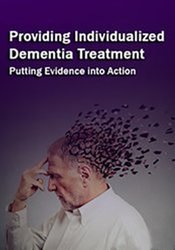
Providing Individualized Dementia Treatment: Putting Evidence into Action
- Speaker:
- Marguerite Mullaney, MS, CCC-SLP
- Duration:
- 5 Hours 54 Minutes
- Format:
- Audio and Video
- Copyright:
-
Mar 27, 2015
- Product Code:
- POS020342
- Media Type:
- Digital Seminar

Description
Working with patients with dementia can be like talking on the phone with a bad connection – maybe some words get through, but maybe they don’t. For patients, it’s a call that never ends, and over time, behaviors such as wandering, aggression, and social withdrawal can take root with the decline of communication abilities. Where one-size-fits-all treatment protocols fail, individualized care can help patients communicate their wants and needs, as well as function in daily situations.
This seminar offers an exploration of the latest evidence-based treatments. Explore effective strategies for restoring impaired function and compensating for deficits that are not amenable to retraining. Learn cognition-focused interventions that have been shown to improve cognitive skills, functional abilities, and performance-based activities of daily living with lasting outcomes. See how to select assistive technologies and external memory aids based on your patients’ needs, and discover which options on the market work best.
Finally, this course will show you how to think “outside the box” and design custom therapies using what you have on hand, offering effective take-home solutions for clinicians who are working on a tight budget, or are frustrated with the limitations of generalizing products and techniques.
Credit
Speaker
Marguerite Mullaney, MS, CCC-SLP Related seminars and products
Marguerite Mullaney, MS, CCC-SLP, is a Speech-Language Pathologist with 26 years of experience evaluating and treating adults with neurological illness or injury resulting in cognitive/communicative deficits. She received her Bachelor’s from Bridgewater State College and her Master’s from Northeastern University. She was the Rehab Director for the 1994 Rehabworks Team of the Year and was the 2003 Bouve College of Health Sciences Alumni Preceptor.
Speaker Disclosures:
Financial: Marguerite Mullaney has an employment relationship with Caretenders. She is the co-founder of Clinical Colleagues Confidential. She receives a speaking honorarium from PESI, Inc.
Non-financial: Marguerite Mullaney is a member of the American Speech-Language-Hearing Association.
Additional Info
Access for Self-Study (Non-Interactive) Access never expires for this product.Questions?
Visit our FAQ page at www.pesi.com/faq or contact us at www.pesi.com/info
Target Audience
- Speech-Language Pathologists
- Speech-Language Pathology Assistants
- Occupational Therapists
- Occupational Therapy Assistants
- Physical Therapists
- Physical Therapist Assistants
- Rehab Managers
- Nurse Managers
- Activity Professionals
- Nurses
- Certified Nursing Assistants
- Nursing Home Administrators
- Social Workers
Objectives
- Describe theories of neuroplasticity
- Identify patient strengths that can be used to develop a plan of care
- Evaluate deficits areas which require increased management to ensure safety
- Choose and customize assessment tools based on individual patient needs
- Develop an outline for treatment sessions using information from case studies
- Review commercially available products that can be used in your treatment approaches to enhance neuroplasticity concepts
Outline
INTRODUCTION: GETTING ON THE SAME PAGE
- Neurological changes
- Behavioral changes
- Theories for intervention
- Staging a hypothetical patient
- Physical changes
- Cognitive changes
ASSESSMENT
- Logemann approach
- Standardized testing
- Informal assessment
- Measuring the patient’s perspective
- Measuring the caregiver’s perspective
- Sorting the strengths from the weaknesses
TREATMENT: PART 1
- Deciding what to work on
- Application of neuroplasticity concepts
- Hildred Schuell’s hierarchy
- Commercially available products
- Thinking outside the box
- Participant hypothetical examples
TREATMENT: PART 2
- Interactive case studies
- Interventions: compensatory vs. restorative strategies
- Cognition-focused interventions
- Limitations of generalization and long-term maintenance
- Assistive technology
- Cognitive stimulation therapy
- External memory aids
- Memory-training programs
- Spaced retrieval
- Errorless learning
- Procedural memory stimulation
- Vanishing cues
- Didactic approaches
- Reality orientation
- Reminiscence therapy
- Simulated presence therapy
- Develop a POC to address the above examples
- Participant hypothetical examples
DESIGNING TREATMENT
- Case study: complete a comprehensive cognitive/communication exam
- Create an individual treatment approach
- Case study: patient with SLUMS score of 21/30; Global Deterioration Scale of 3
Reviews
Satisfaction Guarantee
Your satisfaction is our goal and our guarantee. Concerns should be addressed to: PO Box 1000, Eau Claire, WI 54702-1000 or call 1-800-844-8260.
ADA Needs
We would be happy to accommodate your ADA needs; please call our Customer Service Department for more information at 1-800-844-8260.
PESI Mobile App
Access CE trainings on your phone or tablet through our free mobile app. Choose video or audio-only versions of online courses from the world’s best instructors, and complete your CE requirements anywhere, anytime, at your own pace.




Please wait ...