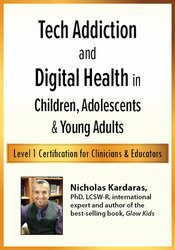
We are on the verge of a global public health crisis – and the kids, teens and young adults you work with are at the greatest risk.
Young people are living their lives in front of a screen with disastrous results. ADHD, depression, suicidality, anxiety, sleep irregularities, thought disorders, and stunted social skills are rising dramatically. Whether you’re a mental health professional or school-based professional the resources available have lacked the concrete strategies and real-life interventions you need to effectively intervene in this growing epidemic.
Dr. Nicholas Kardaras is an internationally renowned expert on tech addiction, author of the best-selling book Glow Kids, and founder and chief clinical officer of Maui Recovery in Hawaii, Omega Recovery in Austin and the Launch House in New York.
Watch him in this Certification training and get the most effective tools, strategies and techniques you need to help children, adolescents, young adults and families hijacked by technology overuse.
Watch and discover:
- Clinical and school-based interventions for problem screen usage
- Safe and effective strategies to work with kids hijacked by tech addiction
- How family dynamics relate to problematic digital behaviors – and what you can do about it
- Proven interventions to reduce video gaming, social media, and YouTube obsessions
- Strategies to improve digital boundaries and discipline
Best of all, completion of this training meets the educational requirements should you choose to apply to become a Certified Digital Health and Wellness Level 1 Professional (CDHWP) through the National Institute for Digital Health and Wellness (NIDHW). To learn more about how you can apply for CDHWP certification and distinguish yourself from other professionals, visit www.nidhw.org.
Purchase today and leave feeling prepared and confident in your ability to lead young people hijacked by tech overuse on the path to a better life!
2 EASY STEPS TO CERTIFICATION
- Finish this Certified Digital Health and Wellness Level 1 Professional (CDHWP) training with tech addiction expert Nicholas Kardaras, PhD, LCSW-R
- For full certification details, apply for CDHWP certification with National Institute for Digital Health and Wellness (NIDHW), and redeem $50 off your CDHWP certification fee, visit www.nidhw.org