
Digital Seminar

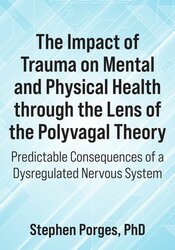
The Impact of Trauma on Mental and Physical Health through the Lens of the Polyvagal Theory: Predictable Consequences of a Dysregulated Nervous System

$69.99 Standard

The talk will focus on how an understanding of polyvagal theory can help clinicians treat clients with trauma. The theory, by providing a comprehensive framework for understanding the physiological and psychological aspects of trauma responses, has been impactful in understanding and treating trauma.   By recognizing the role of the autonomic nervous system in defense and sociality, clinicians can tailor interventions to regulate arousal levels, promote safety, and foster social engagement. By understanding the polyvagal theory, clinicians gain insights into the neurophysiological mechanisms behind trauma symptoms, such as hypervigilance, dissociation, and social engagement difficulties. The theory highlights the optimistic perspective of developing interventions that target the specific neurophysiological pathways involved in feeling safe and restoring autonomic regulation. 

Here's What You'll Learn


Polyvagal Theory 

  • Theoretical basis for a neuroscience of safety  
  • Safety promotes spontaneous social engagement behaviors and health, growth, and restoration 

Principles 

  • Autonomic state functions as an intervening variable 
  • Three neural circuits form a phylogenetically ordered response hierarchy that regulate autonomic state adaptation to safe, dangerous, and life-threatening environments 
  • In response to a challenge, the ANS shifts to states regulated by circuits that evolved earlier consistent with the Jacksonian principle of dissolution [30], a guiding principle in neurology 
  • Ventral migration of cardioinhibitory neurons leads to an integrated brainstem circuit (ventral vagal complex) that enables the coordination of suck-swallow-breath-vocalize, a circuit that forms the neurophysiological substrate for an integrated social engagement system 
  • Neuroception: Reflexive detection of risk triggers adaptive autonomic state to optimize survival 

Application 

  • What does this mean in practice? 
  • Applying in trauma care 

Everything You're Getting


  • More than 1 hour of video content
  • Up to 1.0 CE credits
  • Certificate of completion
  • Handouts and resources

Meet Your Experts


Stephen Porges, PhD

Toggle speaker biography
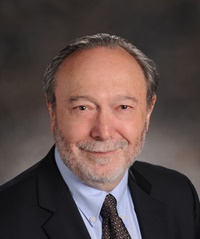
Stephen W. Porges, PhD, is a distinguished University Scientist at Indiana University, where he is the founding director of the Traumatic Stress Research Consortium within the Kinsey Institute. He holds the position of Professor of Psychiatry at the University of North Carolina and Professor Emeritus at the University of Illinois at Chicago and the University of Maryland, and is a founder of the Polyvagal Institute. Dr. Porges served as president of both the Society for Psychophysiological Research and the Federation of Associations in Behavioral & Brain Sciences and is a former recipient of a National Institute of Mental Health Research Scientist Development Award. He has published approximately 400 peer-reviewed scientific papers across several disciplines including anesthesiology, biomedical engineering, critical care medicine, ergonomics, exercise physiology, gerontology, neurology, neuroscience, obstetrics, pediatrics, psychiatry, psychology, psychometrics, space medicine, and substance abuse. His research has been cited in more than 50,000 peer-review publications. In 1994, Dr. Porges proposed the Polyvagal Theory, a theory that links the evolution of the mammalian autonomic nervous system to social behavior and emphasizes the importance of physiological state in the expression of behavioral problems and psychiatric disorders. The theory is leading to innovative treatments based on insights into the mechanisms mediating symptoms observed in several behavioral, psychiatric, and physical disorders.

He is the author of The Polyvagal Theory: Neurophysiological foundations of Emotions, Attachment, Communication, and Self-Regulation (Norton, 2011), The Pocket Guide to the Polyvagal Theory: The Transformative Power of Feeling Safe (Norton, 2017), Polyvagal Safety (Norton, 2021), co-author with Seth Porges of Our Body Polyvagal World (Norton, 2023), and co-editor with Deb Dana of Clinical Applications of the Polyvagal Theory: The Emergence of Polyvagal-Informed Therapies (Norton, 2018). Dr. Porges is also the creator of a music-based intervention, the Safe and Sound Protocol™, which currently is used by approximately 3,000 therapists to improve spontaneous social engagement, to reduce hearing sensitivities, and to improve language processing, state regulation, and spontaneous social engagement.


Speaker Disclosures:
Financial: Dr. Stephen Porges is a Courtesy Professor with the University of Florida College of Medicine, a Distinguished University Scientist of Indiana University, and a Professor with the University of North Carolina. He receives royalties as a published author. Dr. Porges is co-owner of Polyvagal Music, LLC. He receives a speaking honorarium, book royalties, and recording royalties from PESI, Inc. He receives royalties and is a stockholder with integrated Learning Systems/Unyte.
Non-financial: Dr. Stephen Porges is an emeritus member of the American Psychological Association, the Association for Psychological Science, and the Society for Psychophysiological Research. He holds a patent on Televagal equipment.

100% Satisfaction Guarantee

Register for this intensive training course without risk. If you're not completely satisfied, give us a call at 800-844-8260.

We’re that confident you'll find this learning experience to be all that's promised and more than you expected.

PESI App


Access CE trainings on your phone or tablet through our free mobile app. Choose video or audio-only versions of online courses from the world's best instructors, and complete your CE requirements anywhere, anytime, at your own pace.


Access for Self-Study (Non-Interactive)

Access never expires for this product.

Questions?

Visit our FAQ page at www.pesi.com/faq or contact us at www.pesi.com/info

Want this training for your whole team?

Get a customized training package for your team at a discounted rate!


Media Type:
Digital Seminar
Product Code:
POS078679
Duration:
1 hour, 1 minute
Copyright:
Nov 02, 2023
Format:
Audio and Video

ADA Needs


We would be happy to accommodate your ADA needs; please call our Customer Service Department for more information at 1-800-844-8260.

Some text some message..
Back to Top
