
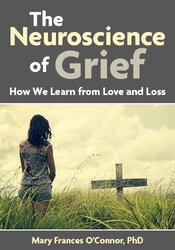
The Neuroscience of Grief
How We Learn from Love and Loss
- Speaker:
- Mary-Frances O'Connor, PhD
- Duration:
- 1 Hour 01 Minutes
- Format:
- Audio and Video
- Copyright:
-
Apr 25, 2024
- Product Code:
- POS059800
- Media Type:
- Digital Seminar

Description
Why does grief hurt so much? Why does death, the permanent absence of a person with whom you are bonded, result in such devastating feelings and lead to behavior and beliefs that are inexplicable, even to the grieving person? Neuroscience and cognitive psychology can provide some answers beyond what grief feels like—tackling the questions of why. Some of the answers to our questions about grief can be found in the brain, the seat of our thoughts and feelings, motivations, and behaviors. By looking at grief from the perspective of the brain, we will discuss the contemporary neuroscience of how bonded relationships are encoded in order to better understand the why of grief. Considering grieving to be a form of learning is helpful to understanding the trajectory of adaptation during bereavement.
Credit
Handouts/Brochure
| File type | File name | Number of pages | |
|---|---|---|---|
| Manual - The Neuroscience of Grief (4.8 MB) | 22 Pages | Available after Purchase | |
| Manual - The Neuroscience of Grief - French (4.8 MB) | 22 Pages | Available after Purchase | |
| Manual - The Neuroscience of Grief - Italian (4.8 MB) | 22 Pages | Available after Purchase | |
| Manual - The Neuroscience of Grief - German (4.8 MB) | 22 Pages | Available after Purchase | |
| Manual - The Neuroscience of Grief - Spanish (4.8 MB) | 22 Pages | Available after Purchase |
Speaker

Mary-Frances O'Connor, PhD Related seminars and products
Mary Frances O’Connor, PhD, is a professor of psychology at the University of Arizona, where she directs the Grief, Loss and Social Stress (GLASS) Lab. She earned a PhD in clinical psychology from the University of Arizona in 2004 and following a faculty appointment at UCLA, she returned to the University of Arizona in 2012. Her research focuses on the neurobiological, cardiovascular, and immune response to bereavement. She believes that a clinical science approach toward the experience and physiology of grief can improve psychological treatment. Dr. O’ Connor’s first book, The Grieving Brain: The Surprising Science of How We Learn from Love and Loss (2022; HarperOne) has garnered praise from peers and literary critics alike and has led to speaking engagements around the world. Her new book, The Grieving Body: How the Stress of Loss Can Be an Opportunity for Healing was published in February, 2025.
Speaker Disclosures:
Financial: Mary-Frances O'Connor has an employment relationship with the University of Arizona and receives royalties as a published author. She receives a speaking honorarium from PESI, Inc. She has no relevant financial relationships with ineligible organizations.
Non-financial: Mary-Frances O'Connor has no relevant non-financial relationships.
Additional Info
Access for Self-Study (Non-Interactive)Access never expires for this product.
For a more detailed outline that includes times or durations of time, if needed, please contact cepesi@pesi.com
Questions?
Visit our FAQ page at www.pesi.com/faq or contact us at www.pesi.com/info
Objectives
- Describe how the neurobiological attachment system encodes close relationships and the separation response to loss.
- Compare separation in pair-bonded animals to the neurobiological effects of acute grief in humans.
- Explain how rumination and avoidance can interfere with the grieving process, preventing learning how to restore a meaningful life.
Outline
Neurobiology of grief and grieving
- Neurobiology of attachment in humans and pair-bonded animals
- The difference between grief and grieving
- The Gone But Also Everlasting theory
- Risks and Limitations
Prolonged Grief Disorder (PGD)
- Debunking the myth of the 5 stages of grief
- Empirical data on the grieving trajectories
Grieving as a form of learning
- Complications for learning are also complications for grieving
Toolkit of coping strategies and psychotherapeutic intervention
- Emotion regulation flexibility, the right strategy for the right moment
- Avoidance
- Rumination
Target Audience
- Psychiatrists
- Psychologists
- Counselors
- Social Workers
- Marriage and Family Therapists
- Nurses
- Physicians
- Other Mental Health Professionals



Reviews
Satisfaction Guarantee
Your satisfaction is our goal and our guarantee. Concerns should be addressed to: PO Box 1000, Eau Claire, WI 54702-1000 or call 1-800-844-8260.
ADA Needs
We would be happy to accommodate your ADA needs; please call our Customer Service Department for more information at 1-800-844-8260.
PESI Mobile App
Access CE trainings on your phone or tablet through our free mobile app. Choose video or audio-only versions of online courses from the world’s best instructors, and complete your CE requirements anywhere, anytime, at your own pace.




Please wait ...