No matter the discipline, very few providers have received adequate training on safely and effectively meeting the complex mental and behavioral health needs of older adults.
Don’t be caught unprepared!
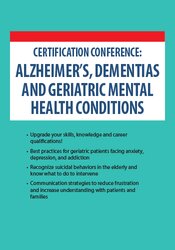
Whether you’re a social worker, psychologist, counselor, nurse, OT, PT, SLP, or Long-Term Care professional, this training is exactly what you need to ensure proper care for geriatric patients facing Alzheimer’s, other dementias, depression, anxiety, trauma, substance use issues, and suicidal ideation. More than a broad overview, this training will give you specific strategies and interventions tailored to older adults.
You’ll receive:
- Cognitive assessment tools and interpretation tips
- Practical solutions to challenging behaviors in dementia patients
- Detailed guidance on recognizing the warning signs of suicidal behavior in older adults
- Adaptive solutions to treat late life depression, anxiety, trauma and drug use
- Tips and tactics for successfully working with families
Sign up today and leave feeling prepared and confident in your ability to overcome the most challenging complexities of working with geriatric patients!
Best of all, upon completion of this live training, you’ll be eligible to become an Evergreen Certified Dementia Care Specialist (ECDCS) through Evergreen Certifications. Certification lets colleagues, employers, and clients know that you’ve invested the extra time and effort necessary to understand the complexities of dementia care counselling. Professional standards apply. Visit www.evergreencertifications.com/ecdcs for details.
CERTIFICATION MADE SIMPLE!
- No hidden fees – PESI pays for your application fee (a $99.99 USD value)!
- Simply complete this event and the post-event evaluation included in this training, and your application to be an Evergreen Certified Dementia Care Specialist through Evergreen Certifications is complete.*
Attendees will receive documentation of ECDCS designation from Evergreen Certifications 4 to 6 weeks following the program.
*Professional standards apply. Visit www.evergreencertifications.com/ecdcs for professional requirements.