nat's test headline - pesi cms
Digital Seminar
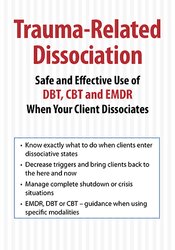
Trauma-Related Dissociation: Safe and Effective Use of DBT, CBT and EMDR When Your Client Dissociates

Trauma-Related Dissociation: Safe and Effective Use of DBT, CBT and EMDR When Your Client Dissociates

Standard - $249.99 $132.49 Anniversary Sale 2026 - 47% off!
Also Available: DVD

“There was nothing alarming in our session…then her posture collapsed and she didn’t say anything.”

Do I intervene? Should I just wait for the episode to pass?

Dissociation can be one of the most unnerving elements of trauma treatment. It can be as subtle as a client staring into space or as alarming as them slumping into their chair and becoming unresponsive.

But whether it’s extreme or just being “checked out,” dissociation can be a major roadblock to successful therapy. And if you don’t know how to identify and work with it, your clients could fail to respond to treatment.

This one-day seminar will provide you with the skills, knowledge and clinical interventions you need to identify and appropriately respond to dissociative states in your clients, from understated to unsettling.

When you purchase you’ll get a comprehensive training so you can safely and confidently:

  • Re-engage clients when they “check-out” during therapy
  • Manage complete shutdown situations and unnerving dissociative states
  • Decrease triggers and bring clients back to the here and now
  • Handle crisis situations
  • Appropriately respond to dissociation when using DBT, CBT or EMDR

Don’t wait to add these must have strategies to your trauma treatment toolbox.

Purchase today!


Note: This product is not affiliated with the IFS Institute and does not qualify toward IFS Institute credits or IFS Institute certification.

Here's What You'll Learn


Types of Dissociation, Risk Factors and Symptomology
  • The function of dissociation
  • The role of early traumatic stress and insecure attachment
  • The neurobiology of trauma and dissociation
  • What dissociation looks like in therapy
  • What to expect - how working with dissociated clients is different
  • A review of current research, risks and treatment limitations
Assessment of Trauma and Trauma-Related Dissociation
  • How to recognize subtle signs of dissociation in trauma survivors
  • Dissociative Experiences Scale
  • Adult Attachment Interview
  • Adverse Childhood Experiences Questionnaire
Managing Dissociation In and Out of Therapy Sessions:
A Phase Oriented Approach to Establish Safety, Increase Stabilization and Reduce Symptoms
  • Establishing safety
  • Teaching clients to recognize dissociation
  • Implementing effective grounding and containment skills
  • Bring dissociating clients back to the body with mindfulness and relaxation techniques
  • Simple ways to re-engage clients when they “check-out” during therapy
  • How therapists can prevent colluding with avoidance
  • Maximize attunement and build trust - exercises that get clients to open up
  • Handling crises and risk management
  • Culturally sensitive trauma work

Using Evidence-Based Treatments with Dissociating Clients:
Managing Dissociation When Using CBT, DBT and EMDR

CBT

  • Identifying, recognizing and challenging negative core beliefs that triggers dissociative reactions
  • Techniques to recognize and shift negative thoughts about the world
  • Breaking down destructive beliefs that lead to distressing emotions and trigger dissociation

Dialectical Behavior Therapy

  • Distress tolerance skills to decrease triggers and bring clients back to the here and now
  • Self-sooth to IMPROVE the moment
  • Paced Breathing
  • Emotion Regulation skills to increase emotional awareness and change unwanted emotions
  • Developing skills to regulate vulnerable emotions

Eye Movement Desensitization and Reprocessing

  • Should I use “EMDR with dissociating clients?”
  • Advanced training required
  • Grounding and calm place techniques

Vicarious Trauma and the Clinician

  • Recognizing the signs and symptoms of vicarious trauma
  • Managing clinician self-doubt and shame
  • Clinician self-care
  • Maintaining healthy therapeutic boundaries
  • Clinicians getting support

Everything You're Getting


  • More than 6 hours of video content
  • CE information to come
  • Handouts and resources

We Recommend


This Item

Trauma-Related Dissociation: Safe and Effective Use of DBT, CBT and EMDR When Your Client Dissociates
Will be added to the cart.
Trauma-Related Dissociation: Safe and Effective Use of DBT, CBT and EMDR When Your Client Dissociates
Digital Seminar
$132.49
$249.99

Meet Your Experts


Katelyn Baxter-Musser, LCSW, C-DBT

Toggle speaker biography

Katelyn Baxter-Musser, LCSW, CDBT, is a Licensed Clinical Social Worker in private practice in Maine where her areas of expertise include trauma, PTSD, abuse, domestic violence, depression, anxiety, grief and relationship issues.

In over 10 years of clinical experience, Ms. Baxter-Musser has successfully worked with dissociating clients across the spectrum of severity with techniques that ground them, bring them back to the body, and re-engage them in therapy. She formerly served as the trauma healing services clinical coordinator for La Frontera Arizona, a non-profit organization dedicated to providing behavioral health counseling, crisis intervention and support to families and individuals facing domestic violence, abuse, hate crimes and other issues.

Ms. Baxter-Musser is trained in Dialectical Behavioral Therapy, Cognitive Behavioral Therapy and is a Certified EMDR therapist. She is a member of the National Association of Social Workers, the American Academy of Experts in Traumatic Stress, the National Center for Crisis Management and the Maine Collaborative Law Alliance. She sits on the EMDRIA Standards and Training Committee and is the regional coordinator for the EMDRIA Southern Maine Regional Network.

Speaker Disclosures:
Financial: Katelyn Baxter-Musser, LCSW, CDBT, CPD, is the Owner, Operator and Trainer at Inner Awakening Counseling & Consulting and receives a speaking honorarium from PESI, Inc. She has no relevant financial relationships with ineligible organizations.
Non-Financial: Katelyn Baxter-Musser, LCSW, CDBT, CPD, is a member of the EMDRIA Standards and Training Committee, the Southern Maine EMDR Collation, the National Association of Social Workers, the American Academy of Experts in Traumatic Stress, and the National Center for Crisis Management.

100% Demo Guarantee

Register for this intensive training course without risk. If you're not completely satisfied, give us a call at 800-844-8260. We're that confident you'll find this learning experience to be all that's promised and more than you expected.

PESI Mobile App


Access CE trainings on your phone or tablet through our free mobile app. Choose video or audio-only versions of online courses from the world's best instructors, and complete your CE requirements anywhere, anytime, at your own pace.


Access for Self-Study (Non-Interactive)

Access never expires for this product.

For a more detailed outline that includes times or durations of time, if needed, please email cepesi@pesi.com

Questions?

Visit our FAQ page at www.pesi.com/faq or contact us at www.pesi.com/info

Please Note

This product is not endorsed by, sponsored by, or affiliated with the IFS Institute and does not qualify for IFS Institute credits or certification.

Claim your FREE listing


Need referrals? List your practice in the directory for FREE!


Media Type:
Digital Seminar
Also Available:
DVD
Product Code:
POS058777
Duration:
6 hours, 21 minutes
Copyright:
Jun 21, 2022
Closed Captions:
Available
Format:
Audio and Video

ADA Needs


We would be happy to accommodate your ADA needs; please call our Customer Service Department for more information at 1-800-844-8260.

Some text some message..
Back to Top