“There was nothing alarming in our session…then her posture collapsed and she didn’t say anything.”
Do I intervene? Should I just wait for the episode to pass?
Dissociation can be one of the most unnerving elements of trauma treatment. It can be as subtle as a client staring into space or as alarming as them slumping into their chair and becoming unresponsive.
But whether it’s extreme or just being “checked out,” dissociation can be a major roadblock to successful therapy. And if you don’t know how to identify and work with it, your clients could fail to respond to treatment.
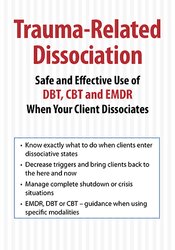
This one-day seminar will provide you with the skills, knowledge and clinical interventions you need to identify and appropriately respond to dissociative states in your clients, from understated to unsettling.
When you purchase you’ll get a comprehensive training so you can safely and confidently:
- Re-engage clients when they “check-out” during therapy
- Manage complete shutdown situations and unnerving dissociative states
- Decrease triggers and bring clients back to the here and now
- Handle crisis situations
- Appropriately respond to dissociation when using DBT, CBT or EMDR
Don’t wait to add these must have strategies to your trauma treatment toolbox.
Purchase today!
Note: This product is not affiliated with the IFS Institute and does not qualify toward IFS Institute credits or IFS Institute certification.