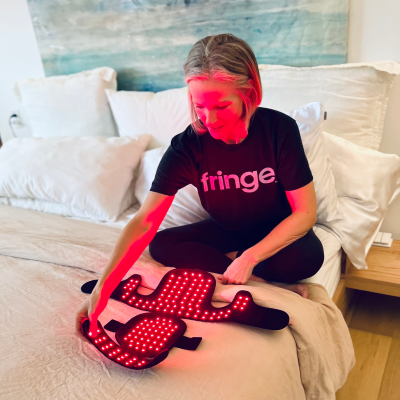
You have a concussion patient who isn’t recovering on your current protocol. They’re weeks out – maybe months – still symptomatic, still not cleared, and you’re running out of tools. Red and near-infrared light therapy may be the adjunct you haven’t fully considered yet.
Photobiomodulation (PBM) isn’t a wellness trend. It carries nearly a century of scientific development, and a rapidly growing body of peer-reviewed research now supports its use for traumatic brain injury – from acute concussions to post-concussion syndrome to chronic TBI. Published in JAMA Network Open, the Journal of Neurotrauma, and Radiology, among others, the evidence is reaching a level that clinicians can no longer afford to ignore.
What makes this moment particularly significant is a 2026 landmark study showing that consistent PBM use throughout a collegiate football season measurably reduced neuroinflammation from repetitive head acceleration events – the first evidence that light therapy can work prophylactically, not just as a recovery tool. For those of us managing athletes in contact sports, this changes the conversation entirely.
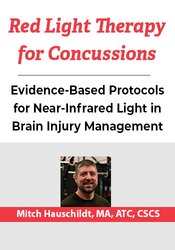
In this one-hour course, athletic trainer and sports medicine specialist Mitch Hauschildt, MA, ATC, CSCS translates the science into clinical practice. You’ll learn exactly how red and near-infrared light interacts with brain tissue at the cellular level – targeting mitochondrial function, reducing neuroinflammation, improving cerebral blood flow, and managing oxidative stress – and how to apply that understanding to real patient scenarios across the concussion spectrum.
This is not a course that will leave you with vague possibilities. You’ll walk away with specific wavelength targets, evidence-based dosing parameters, device considerations, safety screening criteria, and a framework for integrating light therapy into your existing concussion protocols – whether you’re in a Division I athletic training room, a physical therapy clinic, or a high school sports medicine setting.