Suicide loss isn’t like other losses.
Hundreds of thousands are left grieving each year.
You can help them. This training shows you how.
- Interventions from narrative, experiential and meaning-making approaches
- Techniques for guilt, self-blame and spiritual/existential crises
- Skillfully address trauma, anxiety and co-occurring conditions
- Techniques to help rebuild identify and connection
- How to help clients navigate the stigma and isolation unique to suicide loss
Suicide loss isn’t like other losses.
Because these clients aren’t just carrying the grief. They’re wrestling with a unique blend of trauma, guilt and anger mixed with love …
… all while a powerful undercurrent of existential crisis and stigma threatens to keep them drowning in silence.
And here’s the truth. Working at this crossroads requires a clinical roadmap …
That’s why we built this training – to give you the approach you need to treat the complex emotional, relational, and existential fallout survivors face.
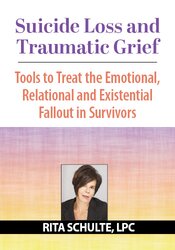
You’ll watch suicide loss specialist and author of Surviving Suicide Loss, Rita Schulte, LPC.
She’s spent her career working with survivors of suicide and traumatic grief. She’s also a suicide loss survivor.
She’ll give you the best narrative, experiential and meaning-centered interventions she’s found in over 3 decades of work so you can:
- Help clients through guilt, self-blame, and spiritual/existential crisis
- Address trauma responses that often accompany suicide loss
- Rebuild meaning, identity, and connection after their world has been shattered
- Confidently help clients navigate the stigma and isolation unique to suicide grief
Hundreds of thousands of people die by suicide in the world every year, leaving millions of their loved ones feeling like there’s just no way forward.
You can help them. This training shows you how.
Purchase now.