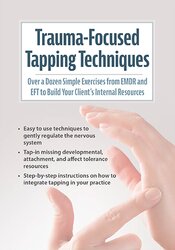
Tapping is part of many of today’s most used therapeutic trauma treatments including EMDR therapy and Emotional Freedom Technique (EFT).
With simple tools clients can use to self-regulate and manage their emotional well-being, tapping is an accessible therapeutic approach that puts the power of healing directly in their own hands.
And because it empowers clients to take an active role in their healing, the therapeutic process becomes a collaborative and mutually supportive endeavor, lightening the load and fostering a sense of shared responsibility for growth and well-being.
These techniques fit with virtually any treatment approach, making tapping a versatile and adaptable tool to help clients release emotional blockages, reprocess distressing memories, and promote the integration of mind, body, and emotions.
Stacy Ruse, LPC, a seasoned expert in trauma therapy, will guide you through how these techniques can be integrated into your practice to access deeper layers of healing and guide clients towards transformation.
By the end of this workshop, you will walk away with a toolkit filled with practical techniques that can be implemented immediately in your practice so you can:
- Build in resources with even your most complex cases
- Enhance engagement and adherence to therapy
- Fill in developmental and attachment deficits
- Better prepare clients for deeper work
- And more!
Don’t miss this chance to build the skills and confidence to integrate tapping into your own practice.
Purchase today!
This course is not affiliated with EMDRIA and does not qualify toward EMDRIA credits or training.