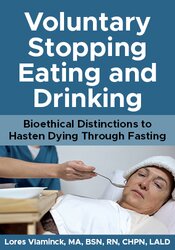
Since health care staff may be faced with patient requests for information and support in their pursuit of Voluntary Stopping Eating and Drinking (VSED), many organizations are developing education, policies, and information for their staff and volunteers. Ethical differences exist not only with staff but possibly with family members. Some may view a plan to intentionally hasten dying by fasting as an act of suicide that should be discouraged; others may regard VSED as an ethically appropriate decision to forego undesirable life-prolonging measures.
Terminally ill patients may grow weary of the symptoms of an advanced disease for which they explore ways in which their death could come sooner. VSED is not to be confused with the natural progression of an advanced illness that occurs as part of the dying process. This session will explore ethical decision-making frameworks and the potential for ethical conflicts in the request for VSED.